Unopposed State Senate Seat has Storied History
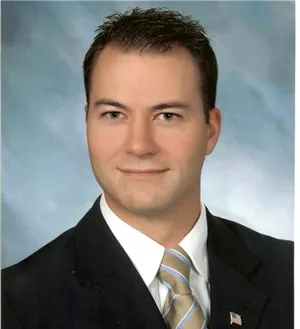
In the absence of primary challenges, this year’s general election match-ups for candidates running for state legislator seats representing the city of Niagara Falls were not in question. Of the two races, incumbent State Senator Robert Ortt will run unopposed in November, affording voters no choice in the matter.
When asked why Ortt was unopposed, Democratic insiders told us that, “The right candidate could not be found, and the NYS Senate Democrat Committee was more concerned about the Panepinto seat,” (60th Senate District) and, “They tried numerous people but nobody wanted to run.”
Some have observed that Senator Ortt maintains a decidedly low profile when it comes to the city of Niagara Falls. In fact, of the last fifty posts on his Facebook page, documenting his appearance at community events across his district this summer in places like Lewiston, Albion, North Tonawanda, Lockport and Brockport, Holley, Wilson,, Wheatfield, Spencerport and Lewiston, only two seem to have taken place in his district’s largest city, Niagara Falls.
That doesn’t prevent Senator Ortt from keeping up on issues facing the city, however. On his award-winning (see Aug, 19 Reporter, “NY State Senate Wins Online Democracy Award for Website…”) website, an online survey asks probing questions such as, “Do you believe that Niagara Falls is headed in the right direction?” and “How would you rate Niagara Falls’ economy?”
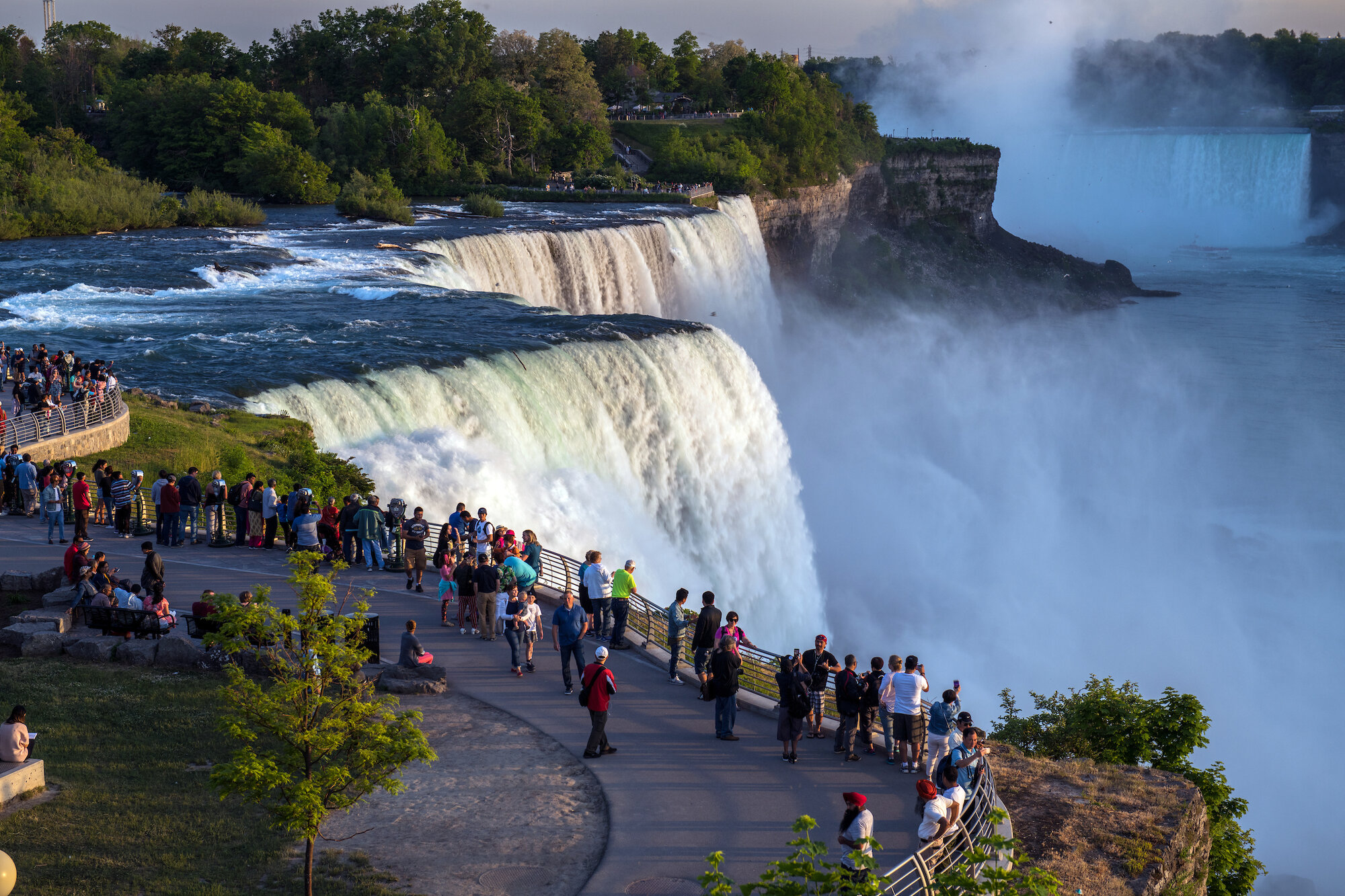
Ortt represents the 62nd State Senate district, which comprises the city of Niagara Falls and assorted small towns, villages and cities spread out over Niagara and Orleans Counties, to the outskirts of Rochester. As the result of 2012 redistricting, the city of Niagara Falls was transferred to the 62nd, joining and making whole the rest of Niagara County, at least in terms of the senate map.
Prior to the redistricting, the city had been part of the 60th district, which thrust up into Niagara Falls from Buffalo.
Some insiders believe that the transfer of the city of Niagara Falls from the 60th, or Buffalo, to the 62nd, or Niagara County, was the result of a deal between then-State Senator George Maziarz, who represented the 62nd, and Niagara Falls Mayor Paul Dyster.
At the time, the proposed location of the new Niagara County Community College Culinary Institute was up in the air. Although the city of Niagara Falls, with its urban setting, Conference and Events Center, proximity to Niagara Falls State Park and numerous cheaply built box hotels on the drawing board seemed the logical choice to many, the village of Lewiston, in Maziarz’s district, was making a serious push to have the Culinary Institute established on its beautiful and thriving Center Street business district.
Dyster craved the Culinary Institute to be located in his city’s downtown, so much so that he drove to Lockport to attend the Niagara County Legislature meeting at which it was to vote on where to site the new $26 million college facility.
Everybody knows how things turned out, but few know how they played out. Until now.
To much celebration in the city that evening, and some wailing and gnashing of teeth in Lewiston, the Niagara County Legislature, which was entirely controlled by Senator Maziarz, voted Niagara Falls. Niagara Falls was not in the Senator’s district at the time, while Lewiston was.
If Senator Maziarz had instructed the legislature to vote Lewiston, it would have voted Lewiston, it’s that simple, but in return for a culinary school, Maziarz got a city.
“Paris is worth a mass,” declared Henry IV, embracing Catholicism as a condition of his ascendancy to the French throne.
Another well-known theory that is that Maziarz took Niagara Falls out of the 60th District and into his own because it created a more politically friendly seat for Sen. Mark Grisanti, with fewer Democrats and far fewer African-American voters.
Grisanti loses Niagara Falls, which is picked up by Sen. George Maziarz, a Newfane Republican, and a large section of minority communities on the Buffalo’s East Side. He keeps Grand Island and gets all of the city and town of Tonawanda and a majority of the North and Delaware districts in Buffalo, while heading south into Hamburg, Orchard Park, Evans and Brant.
Maziarz probably felt secure annexing Niagara Falls since he already had a strong Republican constituency there, and additionally Maziarz was relatively popular and well-known in Niagara Falls. He told the Reporter that even before he had the city in his district, people would call him for constituent services and he said he treated them as if they were his own constituents.
And as far as impacting one of the myriad deals struck in Albany over how district lines are drawn, and amid threats from Governor Andrew Cuomo to challenge the whole gerrymandered mess that was the redistricting plan that year, there wasn’t a peep from Mayor Paul Dyster when his city was redrawn from being in a heavily-Democratic district, the 60th of Buffalo, to the Republican-controlled 62nd, having the effect of reducing the amount of state aid flowing to the city of Niagara Falls for the next ten years.