Unified Tourism Promotion Should be the Goal For Buffalo and Niagara Falls

By Tony Farina
We wrote recently about strength in unity, and we’d like to follow that up in commenting about the region with the idea that unity in tourism promotion between Buffalo and Niagara Falls, or between Erie and Niagara County, would be of great benefit to all, given the natural wonder of the mighty falls and the huge appeal of professional football and hockey in Buffalo. Wouldn’t more cross-town promotion make sense?
Unfortunately, the promotion is sometimes more competitive than in harmony, which, if coordinated, would make more sense and perhaps have a broader reach and benefit the two core cities in a symphonic way that would create more regional appeal. The aim would be to invite visitors for more than just the Falls or a football game, but maybe find time for both, given the close proximity.
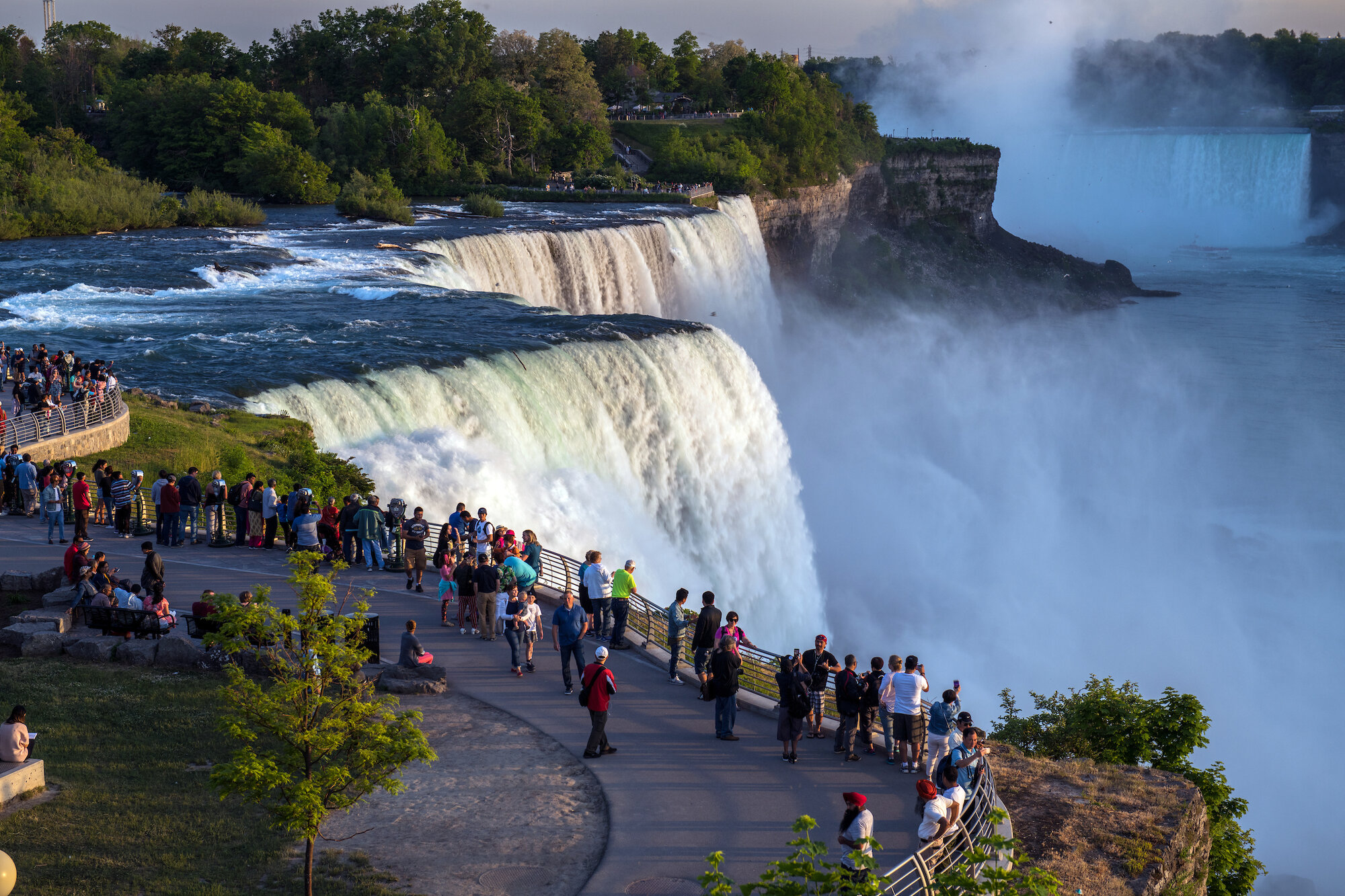
The natural world wonder of Niagara Falls has drawn tourists for generations, and professional football and hockey in Buffalo have given the city a major sports identity. While separated by only about 20 miles, the two powerful tourist engines rarely operate together.
It makes remarkably clear sense to have more unity in promoting the two cities in a harmonious way rather than a competitive way. That should be the goal. A unified regional tourism strategy could easily market a multi-day experience. Imagine a weekend itinerary promoted to visitors across the Northeast and Canada: a morning exploring Niagara Falls, an afternoon touring Buffalo’s waterfront and architecture, and an evening cheering at a Sabres or Bills game.

Such an approach could lengthen visitor stays, increase hotel occupancy across the region, and strengthen the overall tourism economy. For now, however, Western New York’s two biggest attractions continue to operate largely in parallel. The waterfalls thunder in Niagara Falls, the stadium crowds roar in Buffalo, and the connection between them remains surprisingly weak.
The distance between the two destinations is only 20 miles. But in the tourism business, it might as well be much farther.
At the center of the divide are two separate tourist agencies. One is Visit Buffalo Niagara, which promotes tourism for Erie County and Buffalo. The other is Destination Niagara U.S.A., responsible for marketing Niagara County and the American side of Niagara Falls.
Both organizations exist because tourism promotion in New York is largely funded by hotel occupancy taxes. When visitors stay overnight in hotels, a portion of the bill goes to local governments. These funds are then used to promote tourism within that same county.
That structure effectively creates two separate tourism economies. Hotel stays in Buffalo generate revenue for Erie County and fund Visit Buffalo Niagara. Hotel stays in Niagara County generate revenue for Niagara County and fund Destination Niagara U.S.A. Each agency, therefore, has a mission to attract visitors to its own hotels, restaurants, and attractions.
Officially, the two agencies cooperate. In practice, their incentives push them toward competition. It must be recognized that the appeal of the two cities is different, the state park and the falls in Niagara Falls, and sports and the urban experience in Buffalo.
These attractions should complement one another perfectly. A visitor traveling for a Bills game could spend the next morning in Niagara Falls. A family visiting the Falls could extend their stay with a hockey game in Buffalo. Together, they create a tourism package that few regions in North America can match: a world-famous natural wonder combined with major professional sports.
Visitor behavior accounts for some of the divide, but institutional structures reinforce separation. Buffalo sports marketing is coordinated largely through Erie County tourism channels and team organization. Niagara Falls attractions work primarily with Niagara County tourism officials and local hospitality groups.
Because each tourism agency is measured partly by how many hotel nights it generates within its own county, there are limited incentives to promote overnight stays somewhere else.
Ironically, visitors from Canada often experience the region in a much more integrated way than the local tourism system does. Travelers from Ontario frequently combine multiple stops in a single trip. A typical visit might include a morning at Niagara Falls, shopping at the Outlet Malls in Niagara County, and an evening hockey game or dinner in Buffalo.
A unified regional tourism strategy with so much to offer in the tourism corridor could easily market a multi-day experience. A unified tourism strategy is the goal, it seems, to lengthen visitor stays, increase hotel occupancy, and strengthen the overall tourism economy, as we said at the outset.
We heartily endorse that unified strategy approach to maximize the tourism economy.