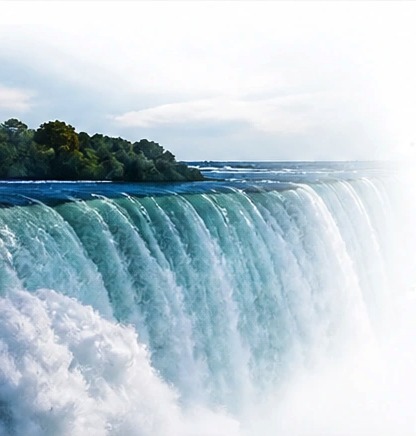
Turning off the falls for the benefit of engineers, construction firms here?
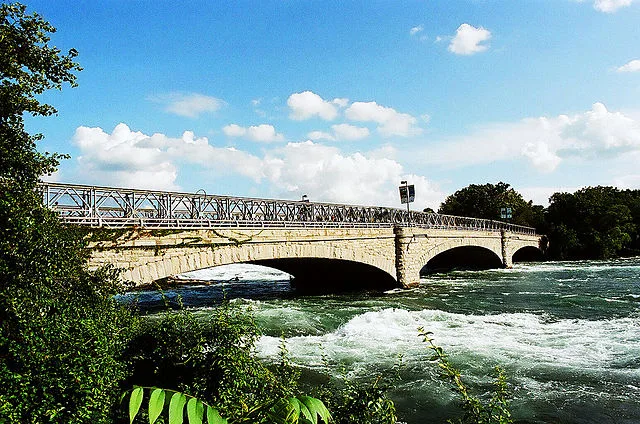
How could it be possible? One might be forgiven for asking.
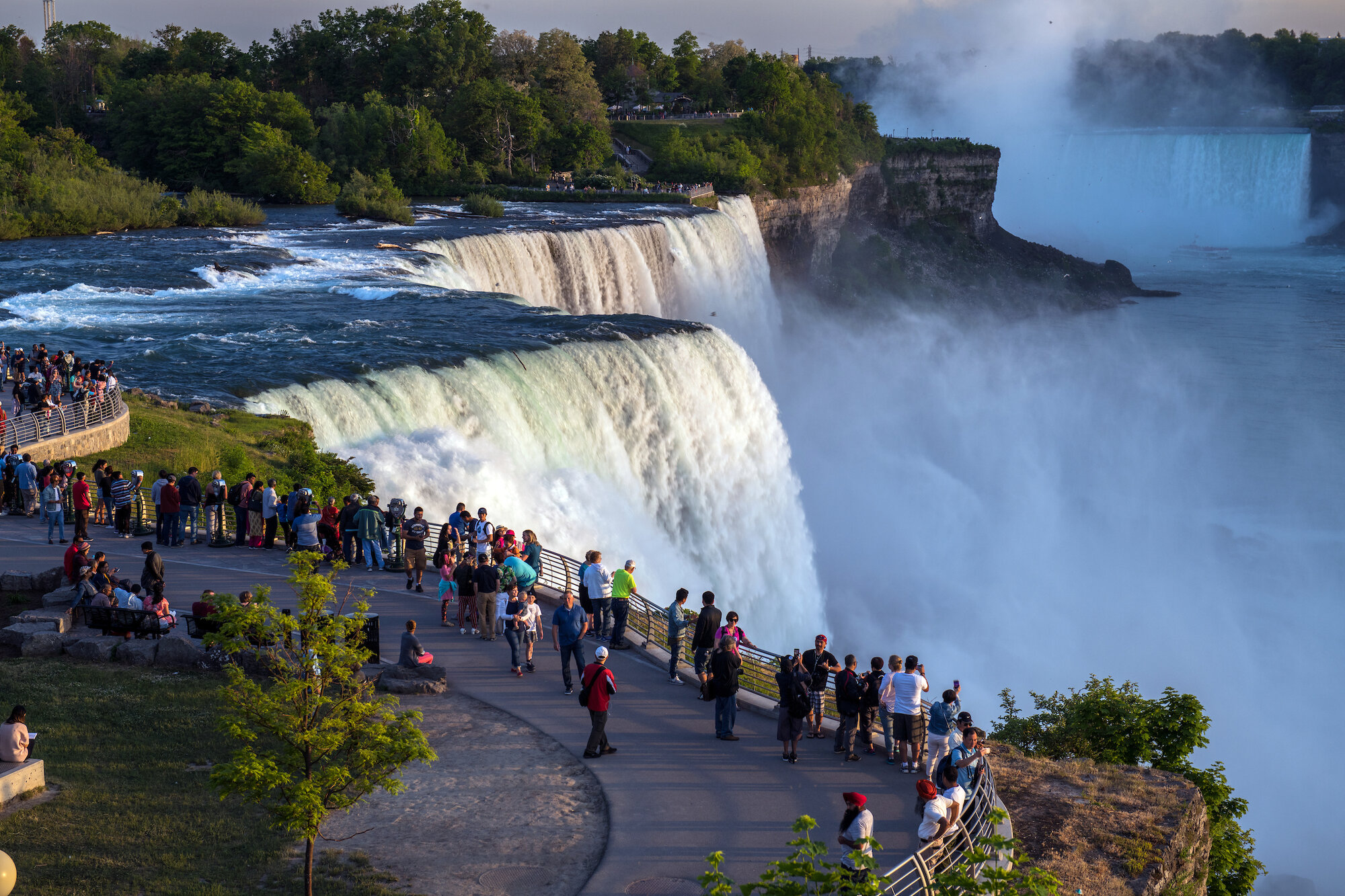
How could it be possible that, using technology commonly available more than a century ago, the State of New York was able to build two stone arch bridges from the mainland to Goat Island in Niagara Falls State Park and now, in 2016, finds itself unable to repair the bridges without turning off the water flowing over the mighty Cataract?
Was the water wasn’t turned off in 1901, when the twin spans were originally constructed? It wasn’t turned off in 2004, when two temporary bridges were erected so that repairs could be made to the originals. In fact, the only time we know of that the American Falls was ever “dewatered” was in 1969, when state officials said they wanted to examine the effects of erosion on the underlying bedrock.
The bridges, one for pedestrians and the other for vehicular traffic, cross a narrow span of the Upper Rapids of the Niagara River. State officials say the dewatering and reconstruction project might cost anywhere from $21.6 million to $37.3 million, depending on the repair option they adopt.
Undoubtedly, the project will actually come in at far more than the upper end of this early projection suggests, creating a huge windfall for developers, construction companies and engineering consultants.
Which prompts another question: Who exactly is the driving force behind the dewatering plan, and what are their motives? Quite clearly, bridges can be built to Goat Island without turning off the American Falls.
In fact, people have been building bridges across turbulent waterways without shutting the water off for thousands of years. The Brooklyn Bridge, the Golden Gate in San Francisco and the Bridge on the River Kwai are but a few notable examples.
Canadian tourism officials were quick to begin salivating at the prospect of the water on the American side being shut down.
“Plan to dry Niagara Falls to repair bridges could be Canadian tourist boon,” read a recent headline in the Toronto Globe and Mail.
“A plan that could see the American side of Niagara Falls go dry for a short period of time to rebuild two bridges might be a boon to Canadian tourism,” the article stated.
Well known local historian Paul Gromosiak, whose many books on the falls have made him the go-to expert for a generation of national and international television reporters, said turning the water off is just a bad idea.
“I think it’s a mistake,” Gromosiak said of the plan to dewater the falls. “I’m very concerned about the long-term effects. I wish they could do it without turning off the falls.”
Would more tourists go to Yellowstone Park to see Old Faithful if the geyser couldn’t be relied upon to erupt at regular intervals? If the Grand Canyon was filled with topsoil would it draw more visitors? Currently, around 8 million people come to Niagara Falls, N.Y., each year to see the falls.
The local media had to look hard, but finally they came up with Michelle Kratts, who served as Niagara Falls city historian until this past December, to put a positive spin on what will most certainly be a tourism disaster here.
“It’s the nature of curiosity,” Kratts said. You want to see what’s underneath, to see its skeleton.”
There are three proposals to replace two bridges to Goat Island — with two of those proposals recommend stopping the flow of water for five to nine months.
State Parks spokesman Randy Simons says the option they are recommending would leave the falls dry from September to April, but it wouldn’t happen until 2019 at the earliest and they still need funding.
Money will be secured after a plan is chosen and State Parks will be able to evaluate opportunities for state and federal funding for the bridge replacement project, he added.
Simons called the prospect of a dry falls “a once-in-a-lifetime” event “because beyond fixing these bridges, there is no reason to dewater the falls.”
A 131-page report on the designs, along with a drawings was presented to the public Wednesday night at City Hall.
“The meeting went great,” Simons said. “People love the idea to fix the bridges — there was no real opposition.”
The proposal the park is recommending involves concrete archways that mimic the original bridges. Engineers would dry the falls for construction by installing a temporary dam — called a cofferdam — just upstream of the island, and the water would then be diverted down the Horseshoe Falls on the Canadian side.
The bridges were closed in 2004 and temporary truss bridges were put in to provide for safe passage. The temporary bridges are an “aesthetically unappealing experience for park visitors,” according to the report recommending the dewatering. The bridges also restrict views of the rapids and are narrower than the concrete arch bridges, the report states.
Former city historian Tom Yots channeled the spirit of Frederick Law Olmsted to make a case for shutting down the American Falls.
“The biggest problem is coming up with the money to do this,” Yots said. “These beautiful bridge designs go back to the beginning of the 20th century. Olmsted designed what construction was to look like in that park so they don’t look out of place. The (temporary) bridge is everything Olmsted would have abhorred.”
Olmstead, of course, would have abhorred nothing more than the flow of water going over the falls being shut down, and during his lifetime did everything he could to see to it that people could see and enjoy the falls. In fact, he designed the bridges in question and oversaw their construction without having to resort to such draconian measures.
The state Office of Parks, Recreation and Historic Preservation estimated it will have a design approval in place by this summer, after all public comments and reviews have been completed. A final design for the project will begin when funding is in place.
Approximately two years will be needed to complete the final design, obtain permits and approvals, and bid and award the construction contract. Actual construction is also anticipated to last another two years, officials said.
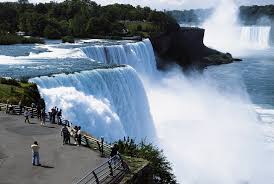
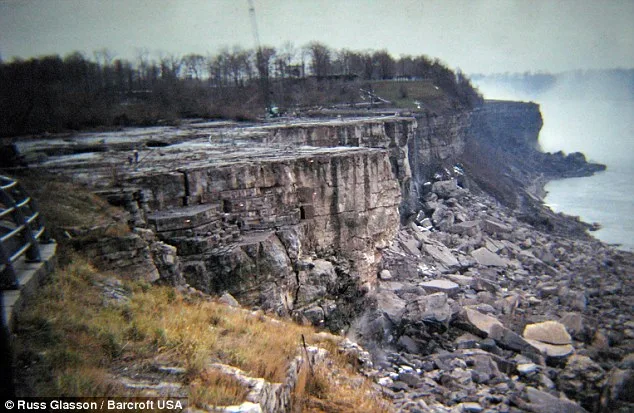
see related stories:
https://niagarafallsreporter.com/waterless-waterfall-big-draw-for-tourists-looking-for-novelty/