Niagara Falls
THE
NIAGARA FALLS REPORTER
LOCAL NEWS  •  LOCAL VOICES  •  LOCAL MATTERS

The OneTaste Case That Should Never Have Been Brought
R
Reporter Staff  ·  May 7, 2025
The OneTaste Case That Should Never Have Been Brought
SharefXin

On Monday, opening statements began in United States v. Nicole Daedone and Rachel Cherwitz, a federal criminal trial that prosecutors claim centers on coercion, exploitation, and spiritual abuse. But a closer look at how this case was built reveals a troubling pattern of government overreach, FBI misconduct, and reliance on discredited witnesses. This is not justice—it is theater.

A Case Built on a Lie

Much of the government’s theory was originally anchored in the writings and recollections of a woman named Ayries Blanck—the so-called “patient zero” of the OneTaste prosecution. Her journals and interviews were cited extensively in the government’s early filings and used to help build the narrative that OneTaste was a coercive cult exploiting women under the guise of empowerment.

But those journals weren’t just misleading—they were fraudulent.

Blanck lied about her experience and fabricated claims within her own writings. Eventually, even the prosecution deemed her not credible and discarded her as a witness. The journals that once underpinned the case were formally discredited. Yet by that time, the damage was done. Investigators, prosecutors, and media collaborators had already spun those falsehoods into a theory of criminal conspiracy.

The FBI’s Role: Misconduct and Manipulation

Enter FBI Special Agent Elliot McGinnis, the lead investigator whose actions now cast a long shadow over this prosecution. McGinnis is the agent who told Alisha Price—another former participant—that she was a victim, even when she said she wasn’t. The government then attempted to use Price’s story as further support for their case, framing her experience through a lens she explicitly rejected.
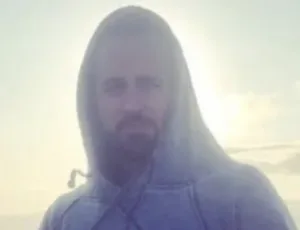
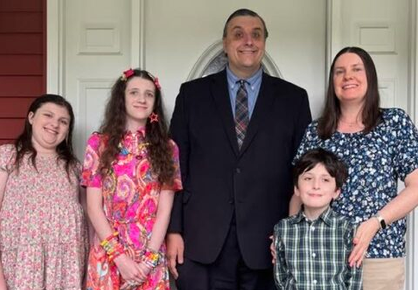
FBI Special Agent Elliot McGinnis – the man behind the fabricated evidence and obstruction of justice.

This tactic—redefining consent after the fact—is central to the prosecution’s approach.

McGinnis’s methods have drawn intense scrutiny. A 36-page complaint filed with the Department of Justice’s Office of Inspector General outlines troubling conduct by the agent, including witness coercion, evidence manipulation, and improper collaboration with documentary filmmakers long before charges were brought. These filmmakers worked closely with the government to “shape” the case—possibly blurring ethical lines between journalism, advocacy, and prosecution.

This is not law enforcement. This is narrative manufacturing.

Redefining Regret as Crime

At the heart of the case are women who once embraced the teachings and lifestyle of OneTaste—some enthusiastically, some experimentally—and later came to regret those choices. The government argues that these women were victims of manipulation so subtle, so psychological, that their labor and sexual activity became criminal acts.

But that is not what the law requires. To prove forced labor, the government must show actual coercion—serious harm or threats of harm. Instead, prosecutors have resorted to importing the language of trauma therapy into the courtroom and recasting adult decisions as criminal victimization. And all this under the watch of Judge Diane Gujarati, who has so far allowed these arguments to proceed despite clear evidence that the foundational witness and materials were fraudulent.
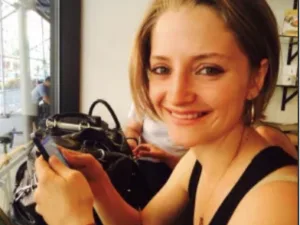
Lying to the FBI? Five years. Perjury? Another five. Wire fraud? Twenty. Obstruction? Twenty more. Witness tampering, destruction of evidence—stack it up, and Ayries Blanck is staring down a lifetime of federal time.

It’s hard not to ask: if the government’s star witness lied, her journals were fabricated, and the FBI manipulated testimony, why is this case even in court?

Because once the smoke clears, the facts remain: The DOJ relied on false journals. The FBI misled witnesses. And prosecutors are still trying to convict two women over a business that taught adults how to meditate—sexually, yes—but consensually.
This is not a criminal conspiracy. It is a cultural clash dressed up as a federal prosecution. It should never have been brought.
SharefXin

Comments (0)

Leave a comment

More From Niagara Falls Reporter

Craig Bucki Stands Out in Race for Supreme Court, Has All the Tools to Be Strong Judge
Featured

Craig Bucki Stands Out in Race for Supreme Court, Has All the Tools to Be Strong Judge

By tony Farina · September 16, 2026

By Tony Farina I’ve covered many court proceedings and trials in my more than 35 years as a newspaper and television reporter and I want to make the point at the beginning of this story that whether elected or appointed, some judges are fair and honest and many others fall short of the mark. In other words, the word jurist does not convey skill and knowledge of the law; it is just a role that some serve with distinction, and others do not. By definition, a jurist is a person who has expert or thorough knowledge of the law but

Is Niagara Falls Crisis Self-Inflicted? Lots of Questions, Few Answers
Featured

Is Niagara Falls Crisis Self-Inflicted? Lots of Questions, Few Answers

By tony Farina · September 15, 2026

By Tony Farina There are certainly many questions swirling around the mayor’s declaration of a state of emergency in Niagara Falls over trash, blight, and deteriorating streets that was declared back on July 20 and has been extended several times since because, according to Mayor Robert Restaino, the City Council refused to approve contractor agreements. But some observers point to depleted staff at City Hall, like in Public Works and Code Enforcement and other departments, as really self-inflicted wounds that are the underlying reasons work is not getting done in the city. Or is there even more to the story,

NIAGARA FALLS BUILT THE MODERN WORLD ON ITS POWER. IT CAN DO IT AGAIN.
Featured

NIAGARA FALLS BUILT THE MODERN WORLD ON ITS POWER. IT CAN DO IT AGAIN.

By Niagara Reporter- · September 11, 2026

The  Data Center That Answers Hochul’s Objections There was a time when Niagara Falls did not ask Albany whether it was permitted to prosper. The river was here. That was enough. The town had something Albany couldn’t give it. It used what was here. Water. Power. Work. Jobs. Industry. A future. In 1895, the Adams plant took the river and put it into wire. The current went to Buffalo. It changed the industrial world. Tesla supplied the designs. Westinghouse built the machines. Niagara supplied the falling water. Then industries came. Electrochemical. Electrometallurgical. They came because Niagara offered abundant, inexpensive electricity.

Niagara Falls Has Millions of Tourists But Needs to Find a Way to Capture That Wealth
Featured

Niagara Falls Has Millions of Tourists But Needs to Find a Way to Capture That Wealth

By tony Farina · September 8, 2026

By Tony Farina The City of Niagara Falls, N.Y., boasts one of the world’s greatest natural wonders that people from around the world come to see, but despite incredible tourism numbers of more than nine million visitors a year, the city of now less than 50,000 people is still pretty darn poor. Niagara Falls does not have a tourism problem; it has a tourism-capture problem, and the distinction should be a starting point for a serious new discussion about the city’s future. And ladies and gentlemen, that discussion needs to start now. The question is no longer whether Niagara Falls