Single-party Governance meets varying fates across Niagara County

Legislature rewards itself with raises after election
By Joe Kissel
Single-party governance — which is never in the best interests of the people — is part of why Niagara Falls currently finds itself between a rock and a hard place.
With the election of libertarian and registered Republican Chris Voccio and independent-minded Democrat Bill Kennedy, there’s hope the council will have the votes necessary to break the administration’s hold over the council regarding spending decisions. (Last week’s nearly complete override of the mayor’s budget amendment vetoes by Ezra Scott Jr. and Andrew Touma also provide a glimpse into how they may vote next year.)
Just as Councilman Kenny Tompkins brought new light to the council’s dealings, the Independence Party’s Austin Tylec won election to the Alderman-at-Large seat in North Tonawanda and is vowing to bring transparency and changes to a one-party council that’s been in power there for a generation.
Small but important changes include bringing live-streamed meetings to residents within “three to six months.”

Longer-term projects include pursuing the “walkable city” concept the 25-year old architect at engineering firm Clark Patterson Lee promoted during his campaign, which saw him defeat former Niagara County Manager Jeffrey Glatz and fellow Independence Party member by more than 1,000 votes.
North Tonawanda also found itself the focus of international attention when bullying issues at the middle school saw it branded as purveying a “culture of violence.” The city followed up with an ordinance holding parents accountable through fines, generating headlines across the globe despite the fact its law was actually based largely on one already on the books in Wisconsin.
In the City of Lockport, the big story of 2017 was the extinguishment of an effort to return ambulance service to the city’s fire department. In the end, Aldermen Joe O’Shaughnessy, Mark Devine and Anita Mullane couldn’t overcome Mayor Anne McCaffrey’s veto and her end-run around the entire matter by including a clause in the firefighters’ renegotiated contract to drop the lawsuit and give them each $6,000 bonuses.
The aldermen in favor of returning service to the firefighters said it was a way for the city to make money and give the residents a better service. Mayor McCaffrey said it would cost the city too much and service with Twin City was fine.
The November elections also saw the council swing sharply back into the mayor’s camp, with Ms. Mullane losing a close election and Mr. O’Shaughnessy retiring to Florida for health reasons. (He also said he didn’t believe the ambulance would get him to the hospital in time if he had a medical emergency.)
Only Mr. Devine will continue to serve in 2018 as a non-administration voice.
In the Town of Wheatfield, the town board remained stoically one-party, with the supervisor position and two seats going unopposed.
Earlier in the year, the town board agreed to give back a $600,000 state grant that would have installed a sidewalk on deadly and unsafe Kruger Road. That unexpected move went against continued pressure from residents who did much of the work for the town securing the grant initially. Town Board members who unanimously changed their positions said residents along the street did not want the sidewalks in front of their houses.
Wheatfield also saw the continuation of the biosolids sewer-sludge legal battle which is still unresolved going into 2018. Oral arguments will commence shortly at the state’s Ag & Markets Department, which is saying that farmers’ rights are being infringed upon by banning biosolids.
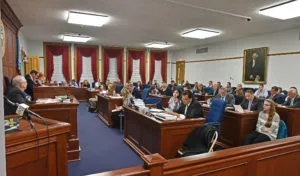
Finally, after the six county legislators up for re-election won their races or went unopposed, the legislature gave themselves an almost 30-percent raise.
Critics said healthcare costs had skyrocketed in the 18 years since the part-time legislature last got a pay increase.
Other arguments included that legislators knew the salary when they accepted the position, as well as “who else gets to vote themselves a raise?”