OPINION: Republican Hubris in Courting Black Voters
BY: Andrew Moss
There’s a breathtaking hubris at work when a political party seeks to suppress the votes of an entire people, then claims its leaders are the champions of that same people. You don’t have to look far to find such hubris in the Republican Party today.
When Donald Trump travels the country, telling African Americans that they’re “on my side now” because they identify with the unfair treatment he says he’s gotten from the justice system, he neglects to mention the injustices his own party has meted out: policies and laws that have suppressed the votes of African Americans for years.
Try visualizing an elephant as the GOP symbol. Then consider the real elephant in the room: voter suppression.
As our nation has become more diverse over the past few decades, a number of Republican strategists and leaders in the early 2000’s argued for making the party more inclusive, particularly in the wake of Barack Obama’s victories in the 2008 and 2012 presidential elections. But another faction of the party won out, drawing on an appeal to white voters that had long roots in Richard Nixon’s “Southern Strategy,” i.e., the cultivation of a white backlash to civil rights advances. Ronald Reagan carried the strategy forward, opposing the Civil Rights Act of 1964 and the Voting Rights Act of 1965, and helping reinforce an ideological pattern that extended into the late 20th Century and early 21st Century.
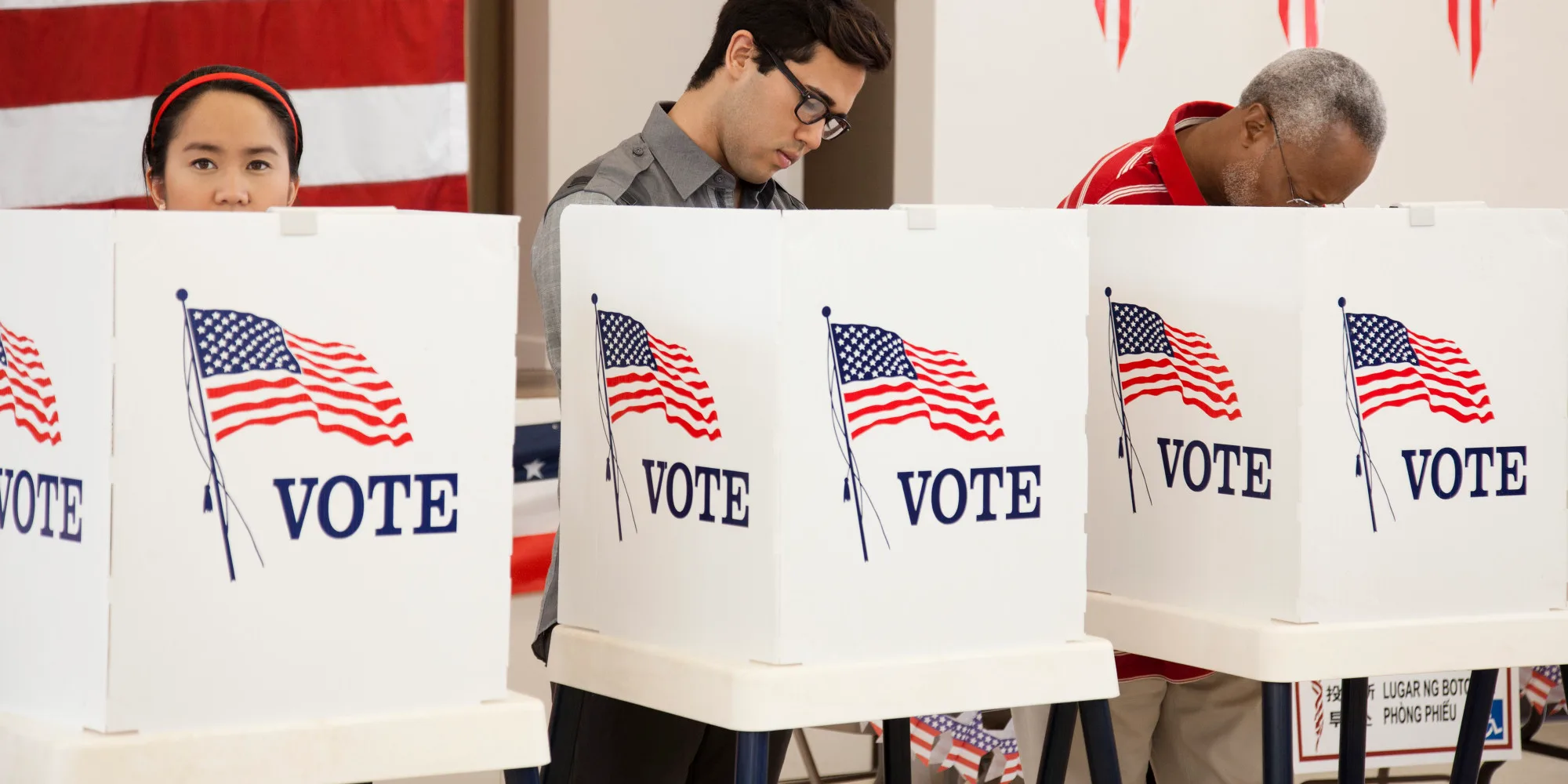
Policies and laws resulting from these strategies led to new efforts to shrink the electorate, particularly that part of the electorate comprising minority voters. No state required photo identification prior to 2005, but by 2016, 13 states – all led by Republicans – had passed laws requiring photo ID. The justification for photo ID was to prevent voter fraud, but evidence of such fraud – despite conspiratorial claims to the contrary – is virtually non-existent. As political scientists Steven Levitsky and Daniel Ziblatt noted, photo ID laws constitute a “solution without a problem.”
And photo ID laws have impacted elections, disproportionately reducing voter turnout by poor people and people of color. One study, for example, of two counties in Wisconsin (Milwaukee and Dane Counties) found that 11 percent of registered voters in these high-minority areas were deterred from voting in the 2016 presidential election because they lacked an acceptable ID.
But photo ID is hardly the only tool in the vote suppression toolbox. Other measures have included eliminating same-day registration, shortening early voting periods, and simply reducing the number of polling places in predominantly minority areas, resulting in long lines. Georgia’s Secretary of State, Brian Kemp, had overseen the closing of 214 polling places by the time he faced off against Stacey Abrams for the state’s governorship in 2018. He had also purged more than two million registered voters from voting rolls, and declined to recuse himself, while running for governor, from his role as chief election administrator of the state.
When Abrams was defeated, she declared: “to watch an elected official – who claims to represent the people of this state – baldly pin his hopes for election on the suppression of the people’s democratic right to vote has been truly appalling.”
But even the above measures don’t fully exhaust the myriad ways Republicans have attempted to suppress Black voters. In 2013, a conservative Supreme Court majority gutted a key provision of the 1965 Voting Rights Act requiring states with long histories of discrimination to get voting changes approved by the federal government (Shelby County v Holder). Most recently, the court’s conservative majority ruled that the redistricting of a South Carolina congressional district showed “no direct evidence” of racial gerrymandering, even though 30,000 Black voters were moved out of the district by the state legislature’s Republican majority.
In 2021, a Republican Senate majority blocked passage of the John Lewis Voting Rights Act, which would have expanded and protected voting rights of all Americans. And, of course, there were the many attempts by Donald Trump to suppress votes in the 2020 presidential election, from the days immediately following the election to the January 6 insurrection.
When you connect all the dots of these and other vote suppressive efforts, and place them next to Donald Trump’s recent efforts to skim off Black voters, you see a picture emerging of a most cynical kind of con.
The cynicism and hubris have not deterred groups like Black Voters Matter and the New Georgia Project from continuing their work in broadening access to the ballot and ensuring voting rights for Black Americans and all historically marginalized groups.
Nor have they deterred individuals from speaking truth to corrupt power. Last August, some Trump supporters found uplift in the defiant mug shot their leader took after being booked in Atlanta on charges of election fraud and other crimes.
Commenting some months later on Trump’s attempt to woo Black voters, the Rev. Al Sharpton stated, “He got a mug shot for trying to rob us of our right to vote. What does he think we are, ignorant?”