Reassessment To Result In Tax Increases Between 17 And 40 Percent Citywide
by Mike Hudson
When Niagara Falls officials say they’re “leaving $112 million on the table” because they haven’t done a reassessment since 2004, what they really mean is that the money has been left in the pockets of city taxpayers.
Don’t look now, those pockets are about to be picked.
That’s right, property taxes in Niagara Falls – which is arguably the highest taxed municipality in the entire United States based on real property value – are about to take a stratospheric jump skyward.
Earlier this week, Niagara Falls Mayor Paul Dyster told reporters that it has been quite some time since the city has conducted a thorough evaluation of the value of its private properties. The last citywide reassessment took place more than a decade ago in 2004.
“It’s been a long time since the city has had a reassessment,” the mayor said. “It seems that we are getting to the point where a reassessment needs to be done.”
Members of the city’s financial advisory panel recommended a property reassessment as part of a report on the state of the city’s finances that the group released late last year.
The 2004 reassessment was never completed, stopping short of LaSalle and leaving some properties in the city assessed at 60 percent of total value. Howls from LaSalle home and business owners were heard all the way to City Hall after property owners there saw the sharp spike in taxes suffered by those in neighborhoods where the reassessment had been completed.
The financial advisory panel calculated in its report a loss of about $112 million in real property value since the last reassessment.
The panel questioned the “political will” of lawmakers to seriously address matters of casino fund usage, property reassessment, tax equalization and the involvement of state governed financial review board.
Despite using revenue from the Seneca Niagara Casino to plug holes in the general fund budget, the city under Dyster has routinely operated in the red, with the deficit running to nearly $8 million in 2011 and 2014.
This year, the bulk of the casino revenue – $13 million – has been earmarked to keep Dyster’s leaky financial vessel afloat.
To a large extent, the reassessment and misuse of casino revenue provides the back story for Dyster’s recent firing of longtime city controller Maria Brown.
Something of a gambler himself, Dyster is betting that Brown’s replacement – part timer Sandy Peploe – will be a more controllable controller than the independent Brown. Peploe served briefly as city controller under former mayor Jimmy Galie during the waning years of the 20th Century, and is being brought out of retirement by Dyster.
Brown was sharply critical of Dyster’s out of control spending habits over the years, and often complained that – even when revenue increased or a new source of funds was discovered – the mayor would find something to spend it on before it even came in.
Members of the panel cooked up a plan to close the property tax gap – which if raised under the state’s legal limit would take in $31 million next year, instead of the city’s roughly $28 million 2016 intake – by taking what they called “a more serious approach” to tax equalization and property reassessment.
By “more serious” the panel actually meant raising taxes and doing the reassessment. The thought that Dyster could be compelled in some fashion to rein in his profligate spending was never seriously considered.
City Council Chairman Andrew Touma concurred with the panel’s report, and has publicly endorsed a citywide reassessment that would result in properties being taxed at 100 percent of their assessed value.
Council members Kristen Grandinetti and Charles Walker have both hopped on board the reassessment bandwagon, which is bad news for city taxpayers because the three represent a majority on the five-member Council.
Homes and businesses in the city are currently assessed at between 60 and 83 percent of their purported value. Niagara Falls, according to the city’s most recent budget reports, presently list residential property at $876.5 million value and its commercial property at $398.4 million value.
In other words, Touma’s proposal would result in tax assessments spiking on average from between 17 and 40 percent.
They just don’t get it. Dyster has raised taxes repeatedly over the past nine years, but the $28 million or $29 million derived from property tax revenue has remained static. The reason? People are just walking away.
The mayor himself pointed out that, between 2010 through last year, the city’s property tax revenues remained relatively stagnant, rising only about 8 percent over that time, well below the rate of inflation, and despite his tax increases.
City services and economic opportunity in Niagara Falls are such that the city has among the highest rates of crime, unemployment and poverty of any municipality in New York State. Many if not most city residents live in subsidized housing or in neighborhoods most people would describe as slums.
But if you don’t mind putting up with the crime, unemployment and poverty, there are lots of places you could live other than the most heavily taxed municipality in the state and perhaps the entire country.
During Dyster’s first two terms in office, as many as 1,000 residents a year have said enough is enough. And that has been in reaction to relatively minor tax increases of between 2 and 3 percent. What will happen when they shoot up by between 17 and 40 percent?
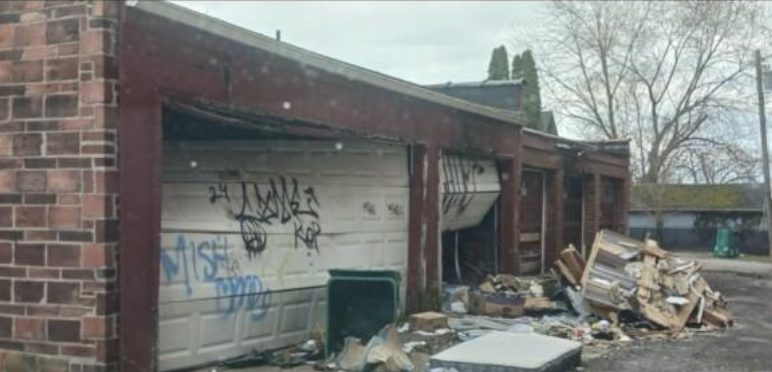
One needs only to drive through any neighborhood in the city to see the hundreds of “zombie houses” whose owners finally just gave up on. With each passing year during the Dyster administration, more of these forlorn former homes have been created than the city can tear down.
If the tax rates remain constant, and don’t look for any reduction, the increased taxes based on higher assessments will undoubtedly result in even more shuttered businesses and a sharp increase in the population exodus the city has been experiencing for more than 50 years.