Niagara Falls’s $200 Million Arena Rests on a Report That Forgot the Truth
By Frank Parlato
A city on the edge of debt. A mayor with a vision.
The feasibility report came. It said: Build it.
It did not say how. Or who would come. Or what would happen if they didn’t.
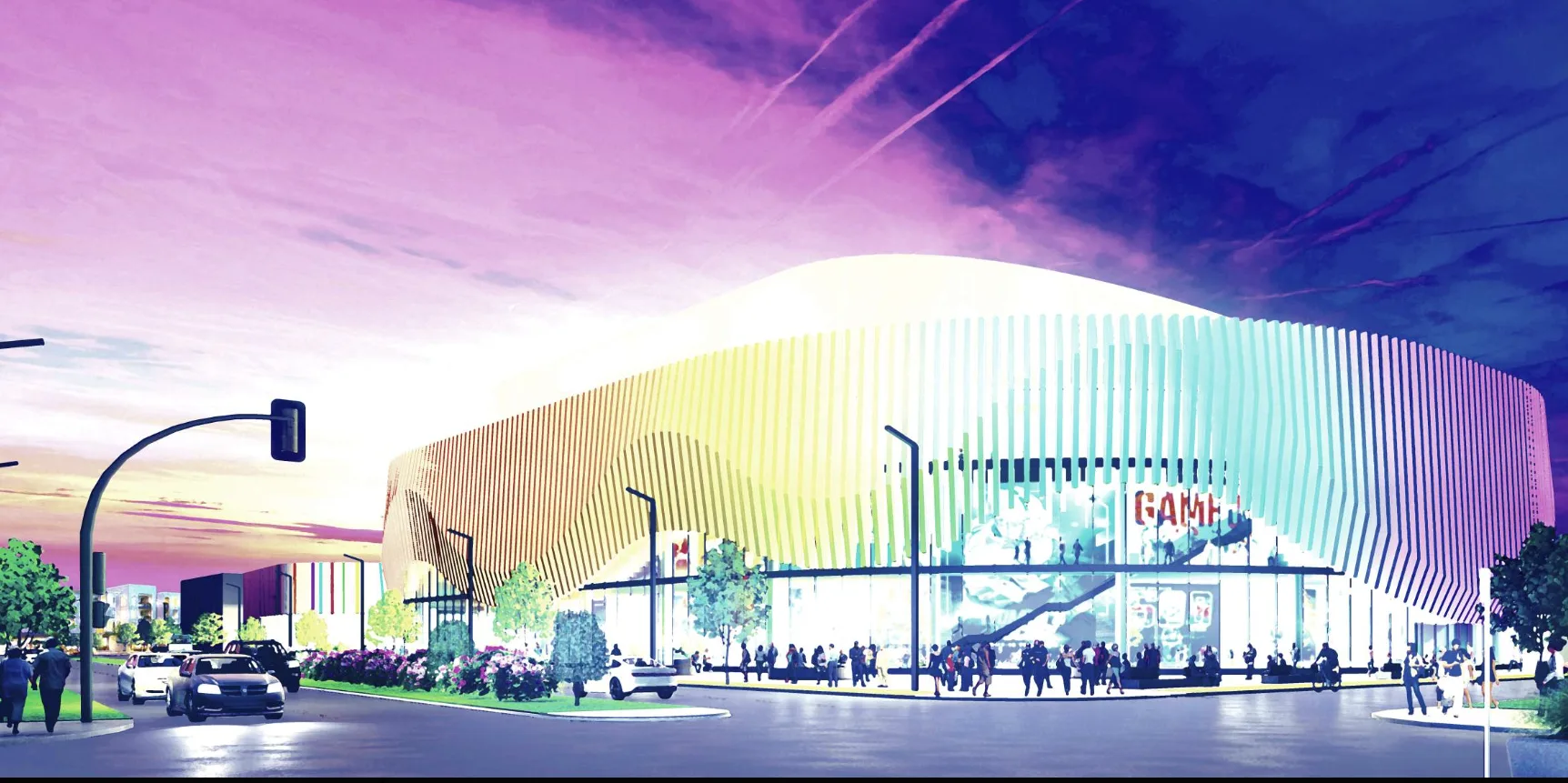
So, the good people of Niagara Falls now entertain Mayor Restaino’s $200 million arena dream.
Based on a report that avoids every hard question.
Feeble Report
The mayor dreamed of a grand arena in Niagara Falls, seven thousand seats. The report failed to explain how to pay for it.
No assessment of risk.
It was not a report, not really. A study that counts beer sales but not bond debt, that imagines a team without having one.
Still, the report, like a loyal dog, had done one thing: It sniffed out the location the mayor already wanted.
Mayor Restaino called it “great”: a feasibility study to determine whether the location was appropriate.
The consultants, Sports Facilities Advisory (SFA) of Clearwater Florida, had assessed only two locations.
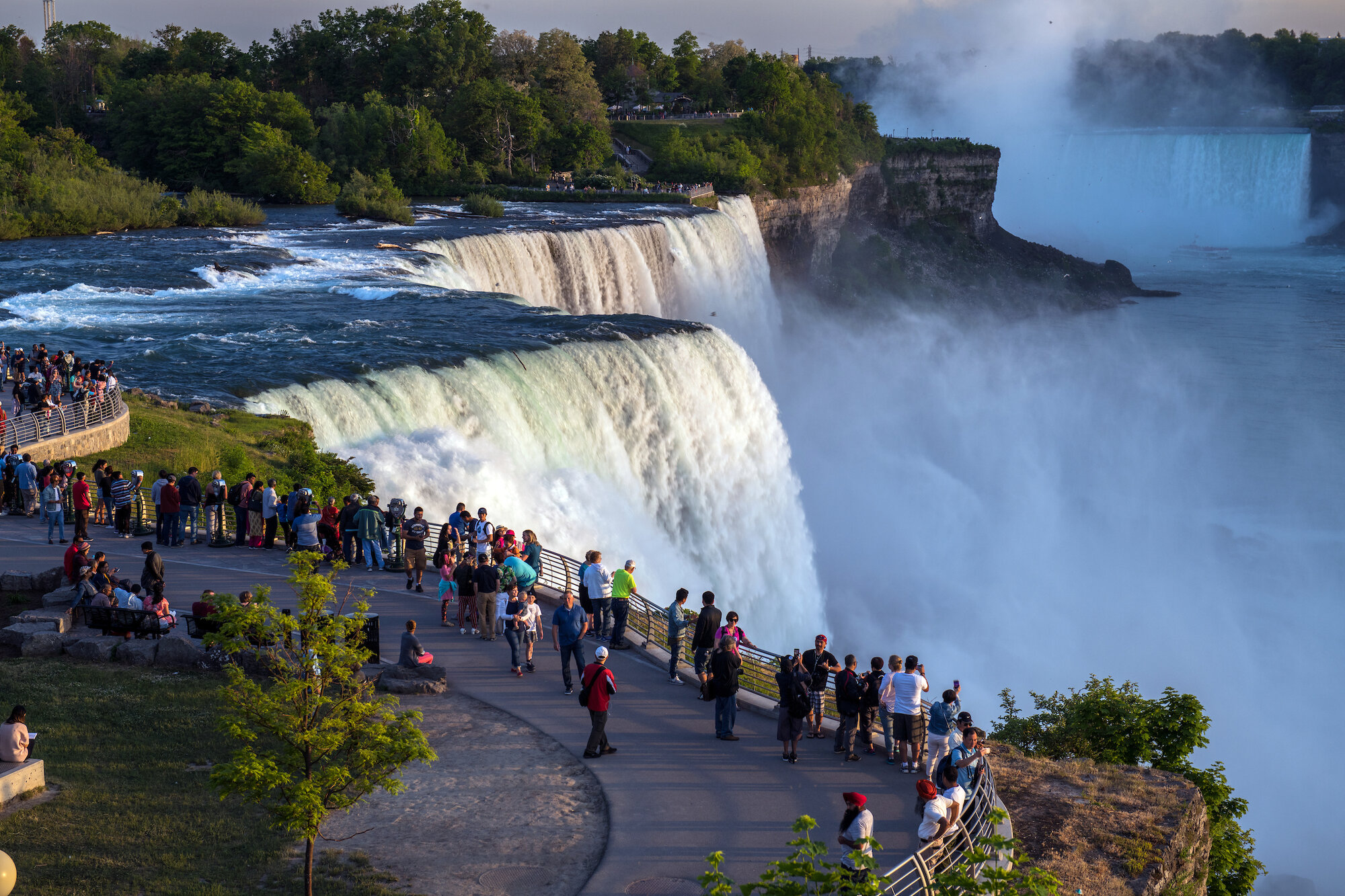
The study did not specify how it identified the two locations in an entire city that alone might qualify for the arena site. The locations were the empty Rainbow Mall, situated in the heart of the downtown tourist district, approximately a thousand feet from Niagara Falls itself.
Parcel 0The other is a ten-acre site on the far side of the Seneca Nation, a mile from the falls, marked on maps as Parcel 0.
The mayor had selected “Parcel 0 before he commissioned the report. And the report, like a loyal butler, confirmed it.
The consultants said they considered three sites, but no one named the third. Parcel 0 was already home.
In fact, the study refers to Parcel 0 as “Centennial Park” as if the mayor had already built the arena there.
It sounded cleaner than calling it by its name—Parcel 0.
The mayor had chosen it to be the future Centennial Park arena, so the consultants named it in their study according to the name the mayor wanted.
Parcel 0 became, in the study, Centennial Park.
But it wasn’t that easy in real life.
A Challenge Not Mentioned
The City didn’t own Parcel 0. Niagara Falls Redevelopment LLC (NFR), a private company, did.
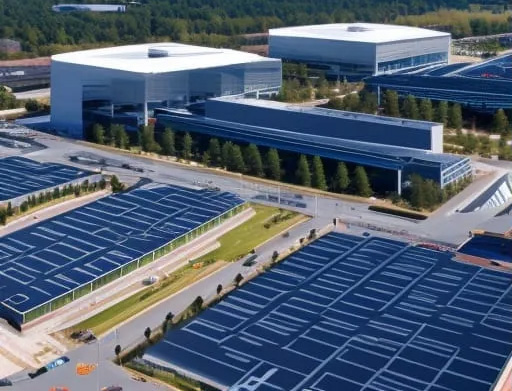
Owned by two billionaires from Manhattan, Howard and Edward Millstein, NFR had its own plans: A digital data center designed to meet the demand of high-tech companies would pay a premium for premier secure storage of its data. NFR estimated the project cost at $1.5 billion, with more than 500 full-time staff.
Most cities would fight to attract private investment in this industry.
The mayor filed an eminent domain lawsuit to force NFR to sell the land. The lawsuit is ongoing.
The City of Niagara Falls cleared a hurdle. The New York State appellate court ruled that the forced sale (called a “taking”) serves a public purpose.
The law states that a City may force the sale of private property, but the City does not set the price. The next step involves the City paying for Parcel 0.
Through a lengthy, laborious legal process that includes appraisals and counter-appraisals, as well as market studies, the parties present their evidence of “just compensation. The court then decides the price.
The court may consider the opportunity cost that NFR loses. When billionaires invest more than a billion, they expect to make more than a billion.
Because the mayor chose Parcel 0 (without first conducting a feasibility study), for his arena, NFR lost an enormous economic opportunity.
The final cost to the city for Parcel 0 could be $20 million. It might be $50 million. – in addition to the $200 million cost of constructing the arena.
The feasibility study selected Parcel 0 without mentioning the litigation. To mention it might reveal the irrationality of the decision.
Is Arena the Highest and Best Use for Parcel 0?
The feasibility report also did not evaluate whether Parcel 0’s “highest and best” use is a $200 million taxpayer-funded arena.
The study could have asked, ‘What would help the City more? A data center or an arena?’
The study didn’t examine whether a data center would bring more jobs, revenue, or growth. It didn’t analyze tax benefits.
Economic Impact Comparison Not in Study
The SFA feasibility study projects that the arena will boost local businesses, resulting in an annual economic impact of $11.5 million by the fifth year.
The economic impact is not taxes paid (since the arena will pay no taxes). It is the money that local businesses collect from visitors who come to the arena and spend money while in the city.
Some of this visitor spending generates additional taxes for the City, such as hotel and sales taxes.
The mayor has argued that the core reason for building the arena is the economic impact on local taxpaying businesses.
NFR conducted its own a study on its proposed data center. The report stated that the data center would have a seven times greater (621 percent) economic impact than the arena, producing $83 million in economic impact, including more than $10 million in direct tax revenue.
Ironically, the arena bond payments could cost City taxpayers $10-13 million per year.
They never saw the irony. Or perhaps they did and chose to look away.
The land could have paid for the dream. The taxes alone from the data center could have paid for the mayor’s rink.
The first option could’ve paid for the second one—if they weren’t hellbent on building the arena where the data center could be built. SFA didn’t study that option.
It presented the arena as gain without loss, ignoring the possibility that one could fund the other—if only geography changed.
If they let NFR build the data center, they’d make enough money to pay for the arena debt, lights, Zamboni, and all. Just put it somewhere else.
Cost Unknown?
In evaluating the potential arena sites, the feasibility study ranks the two sites studied, Parcel 0 and the Rainbow Mall, equally in terms of acquisition cost, labeling both as Undetermined or “TBD” (to be determined).
The price of Parcel 0—currently the subject of eminent domain litigation—is indeed undetermined.
However, the study gives a TBD (To Be Determined) designation to the Rainbow Mall, (AKA Niagara Center Mall) which the City already owns.
Choosing the Rainbow Mall would avoid litigation, eminent domain, and acquisition costs. There is no need to seize, buy, or sue. The study listed the acquisition cost for Rainbow Mall as “TBD,” implying it was unknown.
Admitting the truth might’ve made Parcel 0 look foolish. Still, the study concealed the most obvious financial advantage of the Rainbow site.
Parcel 0? The price is literally in the hands of a judge.
Rainbow Mall? The cost is zero.
The City owns it and does not need to buy it from itself.
By assigning both the same label, (TBD), the study protects the mayor’s preferred site from scrutiny.
Tax Free Issues
The SFA report presents the proposed Centennial Park arena as a catalyst for tourism and local economic development, projecting an annual economic impact of $11.5 million.
What it does not address is that if Parcel 0 is selected, being adjacent to the Seneca Nation of Indians’ casino and retail complex, much of the economic impact will occur within the Seneca Nation, which is exempt from local sales, property, and hotel taxes.
The City would build a $200 million arena with taxpayer money, and where does the money go? Across the street. To a tax-exempt casino complex, with a 26-story hotel, spa, two theaters, 12 restaurants, five retail stores, a gas station, a smoke shop – all tax-free, all competing against taxpaying businesses in the City.
The study called it economic impact. And maybe it was. Just not for the people who paid.
The City would build the rink. The SFA report projects $11.5 million in economic activity. What it doesn’t say is how much of it will happen on sovereign land—the Seneca casino complex—where the City sees no return. The tribe reaps the windfall.
By ignoring the sovereign status of the neighboring casino, the study overlooks the possibility that if Parcel 0 is the choice, the City may not feel the economic impact.
If visitors to the arena visit the closest commercial offerings, then they enter a sovereign tax-free zone.
If built at Parcel 0, most of the economic activity may flow into a sovereign zone, beyond the reach of city tax collection. This detail, omitted from the SFA report, strikes at the core rationale for public investment: to stimulate local, taxable business.
If you build it, they may come. But if they do, they’ll go next door to the casino. To the rooms, shops, and shows, the City doesn’t tax.
You build a $200 million arena with public money, and if it actually works, all the cash flows next door to a sovereign casino that doesn’t pay taxes. No tax on booze, rooms, or blackjack.
The SFA report fails to assess the fiscal consequences of situating the proposed arena adjacent to the tax-exempt Seneca Nation. Nor does it compare this with the Rainbow Mall site, which is located downtown and surrounded by businesses, many of which are struggling and pay taxes.
But the study didn’t study the difference between a tax-free zone and taxable neighborhoods. It never considers that Rainbow Mall is city-owned, surrounded by businesses that contribute to the tax base. Instead, it recommends placing the arena next to the only property in town that returns nothing to city taxpayers.
Parking Undisclosed
The SFA report proposes an 800-space parking facility at Parcel 0, which would consume 62% of the site’s footprint. Parking for 800 cars falls short of industry standards, which suggest 1,750 to 2,333 parking spaces for a 7,000-capacity crowd.
The report does not mention that the Rainbow Mall has a 2,000-car parking ramp that the City already owns.
Bizarrely, the SFA study penalizes Rainbow Mall for not having parking, but fails to mention the existing 2,000-space ramp.
By disregarding an already operational city asset—the attached Rainbow parking ramp —the study mischaracterizes the Rainbow Mall parcel as too small, despite its superior parking infrastructure.
Despite Rainbow Mall’s logistical advantages—city ownership, a 2,000-space parking ramp, and a central location—the study endorsed Parcel 0, a site fraught with litigation and uncertain costs.
A Legacy Needs to Look Bright
Why was Rainbow Mall not chosen? Maybe because the mayor had his heart set on Parcel 0 long before the consultants arrived.
Rainbow Mall was right there—bigger, cheaper, readier. But it wasn’t his. It wasn’t glowing. It didn’t say “legacy.”
The study didn’t pick Rainbow Mall because the mayor didn’t want it to. The consultants knew the gig: tell the boss he’s brilliant. That’s why Parcel 0 got picked.
The story was written in reverse: start with the ending, fill in the rest.
The mayor’s dream—bright, hollow, brittle—might still be built. But only if people forget how much cheaper truth would have been.
And the study, like a loyal valet, assured him the place he’d picked was perfect.