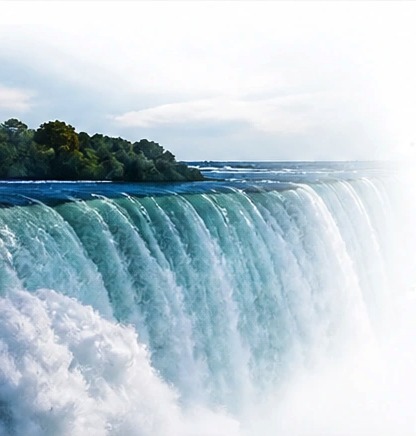
Niagara Falls’ model show how state controlled tourism impacts poverty stricken city
By Frank Parlato;
There is a battle between the US Dept. of Highways and Gov. Cuomo’s NYS Department of Transportation over the state’s right to keep illegal “I Love New York” billboard sized signs along highways in the state.

The US Highway Department wants them down since they claim they are a distraction to motorists.
The state wants to keeps the I Love New York signs since it aids the state in its efforts to direct tourism in the state. The signs both direct tourists to specific places nearby and also advertise a state operated tourism phone app which when downloaded will give directions to places the state has decided are places for tourists to visit.
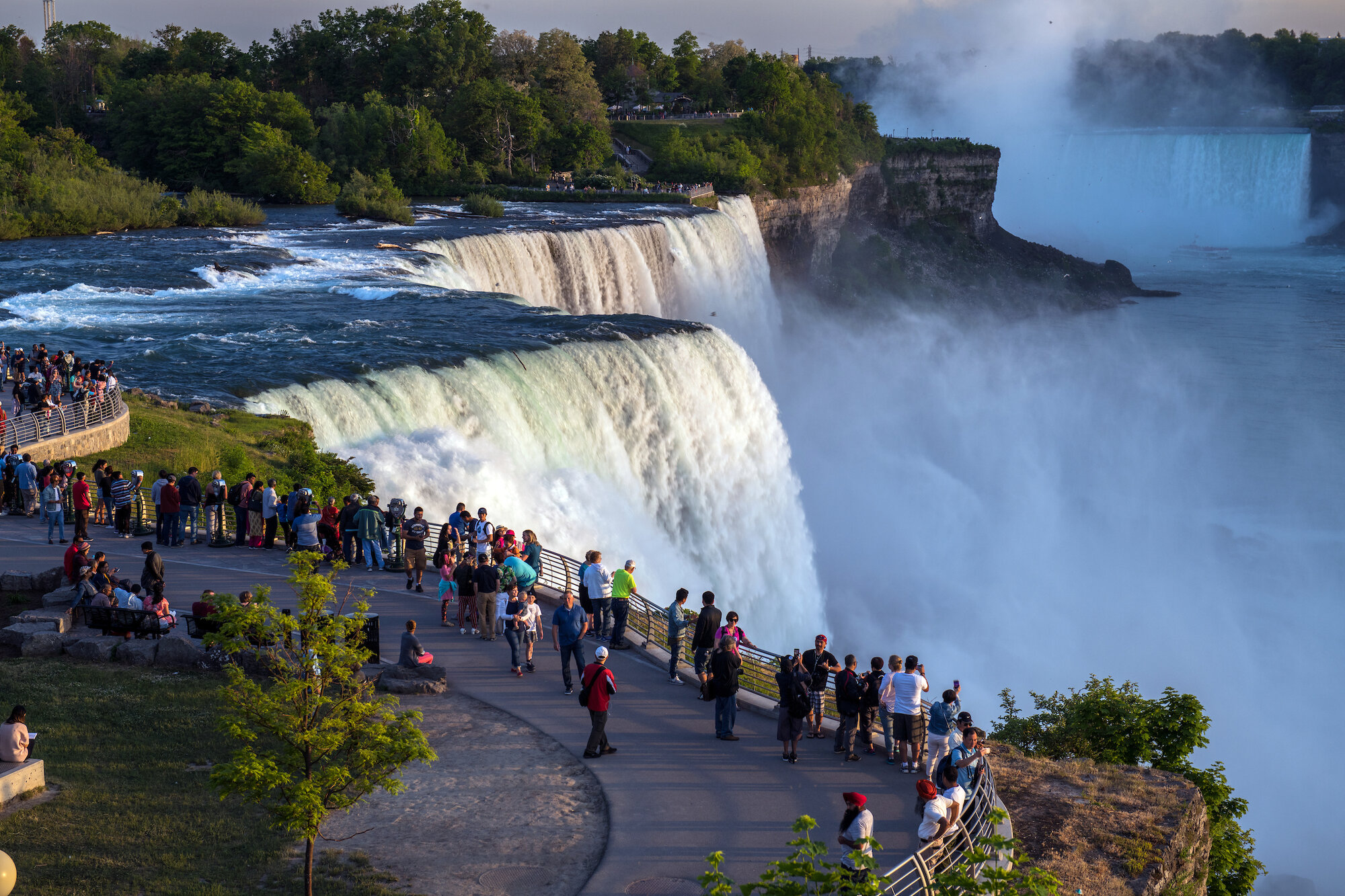
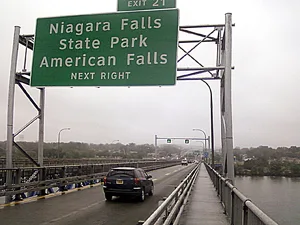
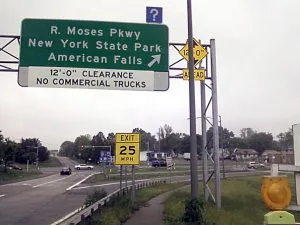
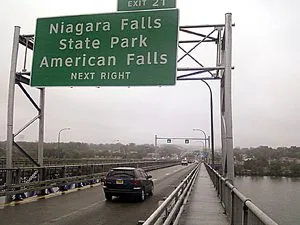
A model of how a successful implementation of state plans to guide tourists works can be seen in Niagara Falls, New York. There, state signs on state roads have directed tourists inside the Niagara Falls State Park for years. The signs carefully guide motorist away from the city and into the state park.
Once inside the park, signs point out where people are to pay the state to park their cars, where they can go to eat, buy gifts, book banquets, see movies, ride trolleys, and go on attractions operated by state approved vendors inside the park. The tourist see signs everywhere pointing to attractions within the park and never see a sign for any attraction in the city except the nearby Seneca Casino which pays 25 percent of its net take on slot machines to the state.
In this way the state park has set itself up in competition with the city for tourism business. It has been wildly successful. Tourists visiting Niagara Falls usually travel directly inside the state park and spend most, if not all of the money they spend in Niagara Falls within the state park.
The model created has been designed for “day tripping.” That is tourists come to the park for the day and see it all. Without being directed to attractions outside the park which could conceivably interest tourists enough to keep them in town the following day, the tourist sees the state park and assumes there is not much else to do and leaves town.
The model works best when they come and go quickly during the main tourism season – July and August which is when most tourists come and the crowds often max out the limited space in the park.

A four hour visit has been the model used for greatest economic efficiency since parking and space is limited. During the peak season, tourists pay to park, but can walk around to see the falls for free – which consists of viewing it from various vantage points. But if they want to see it from beyond, above or below, they must pay. They can pay to go on an observation deck or pay to ride down elevators and pay to take a a 20 minute boat ride called the Maid of the Mist, which is operated by a state approved vendor who pays a concession fee of eight percent of sales to the state. People can also pay to go down another elevator in raincoats to walk on wooden walkways very near the base of the falls – an attraction called the Cave of the Winds.
Tourist are encouraged to eat at state park restaurants or concessions stands, and purchase souvenirs at a number of state park stores which are operated by Delaware North, a large parks concession company which pays the state ten percent of sales. They can also pay to take a trolley which will ride them around the park and they can get off at various places to buy things or pay for attractions and pay to see a 3-D movie about the falls.
After riding the boat, walking the Cave of the Winds, looking around, watching a movie,riding a trolley, eating and buying gifts, the tourist has nothing much else to do inside the park. They are encouraged by state signs to leave the city on state roads which makes room for others to come and spend money.
It is estimated that the Niagara Falls State Park gets eight million visitors per year making it the most visited state park in America. Most of the visitors come in the summer and particularly in late June through early September. During busy days – summer Saturdays are the busiest – other than the three big holiday weekends – Memorial Day, Fourth of July and Labor Day – the state park tries to “turn over” parking spaces – of which they have about 1,500 – three to four times per spot per day.
If people park inside the state park and wander off into the city, it prevents turnover needed to maximize tourism dollars for the state. On the other hand, once the state park lots are full, it is desired that people who parked in the city, because they could not get into the state parking lots, wander into the state park as quickly as possible and spend money as opposed to spending money inside the city.
In the shoulder season, however – – April through June and September through October, the model is different. Turnover of parking spaces is not important. To achieve maximum profits, getting tourist to park inside the state park is key.
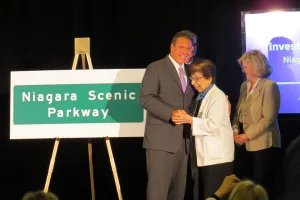
Regardless of the time of year, state signs placed in the city direct people to the park and a newly reconfigured $20 million state funded “driveway” called the Niagara Scenic Parkway (formerly known as the Robert Moses Parkway) cuts off the city from most of its waterfront, but connects the interstate thruway to the state park ensuring people using GPS will get off the thruway and go directly to the state park.

Parking there first, not only ensures parking revenue but ensures tourists don’t eat at a city restaurant before arriving in the park and/or buy souvenirs at shops outside the state park.
In Niagara Falls, the state’s economic interests lies with improving business within the park who are in competition with privately-owned city businesses.
Enhancing that model, Gov. Andrew Cuomo recently proposed to build a lodge inside the state park to capture overnight tourists who now stay in hotels in the city. For the first time in the state park’s history – it was established in 1886, making it the oldest state park in America – the state will now also be vying for overnight accommodations’ business.
The result of the efforts of the state has contributed in large part to the City of Niagara Falls not capitalizing on its tourism opportunities. Niagara Falls is often called a wonder of the economic world, having one of the highest destination attractions in the world while at the same time being one of the poorest cities in America.
A marvel of government intervention in the market place – almost all tourist dollars flow out of the city to state government.
This is ironic since the state advertises their growing commercialized Niagara Falls State Park as an Olmsted Park, named after Frederick Law Olmsted, the father of landscape architecture, who originally designed the state park as a reservation, while abandoning all of his original design plans.
Ironic, also is that across the river in Canada is a city with the same name, Niagara Falls, Ontario, which is a boom town. They do not have New York to love and that has made all the difference.