New Train Station, Amtrak both Heavily Dependent on Government Subsidies
The 2013 Amtrak “Station Program and Planning Guidelines” document specifies numerous requirements for any municipality contemplating construction of a new rail passenger station.
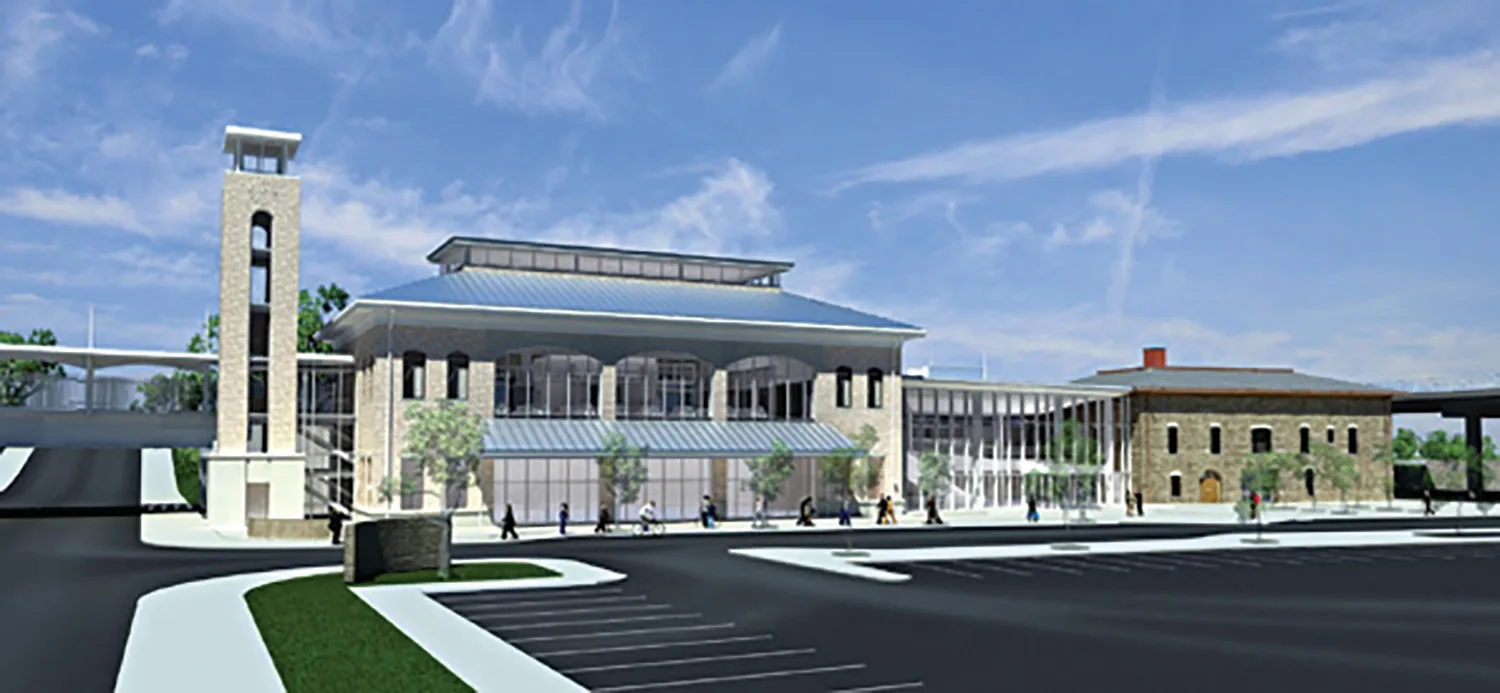
Notwithstanding its imposing height and size, and the fact that it spans an entire city block, the new Niagara Falls International Railway Station and Intermodal Transportation Center isn’t, in Amtrak’s estimation, really a big deal, based on ridership criteria set forth in the Guidelines.
Amtrak classifies stations as follows: large (>400,000 riders a year), medium (100,000 to 400,00 a year), caretaker (20,000 to 100,000) and shelter (<20,000).
According to Amtrak published figures, Niagara Falls had a 2015 ridership of 31,354, down from 32,598 in 2014. That would put it at the lower end of the “caretaker” category. If 10,000 or so fewer passengers were to board or disembark the train here, the Niagara Falls train station could be rated a “shelter”.
By definition, an Amtrak “shelter” typically consists of a platform, a bench or two with a canopy overhead, lacking any amenities whatsoever, in the middle of a rural village or cornfield.
A Caretaker station such as the new Niagara Falls Intermodal Center is not required by Amtrak, according to the “Station Classification and Features Matrix” in the Guidelines manual, to have any of the following features: parking, taxi access, transit or bus access, restrooms or a drinking fountain, any kind of ticketing (agents or automated) or baggage handling capability, passenger information staff or display, security including local police camera surveillance, vending or retail, all of which, except for baggage services, is either extant at or planned for the new train station.
In other words, very few of the “bells and whistles”, if ticketing, retail, passenger information and security could be considered as such, were required by Amtrak for it to move into and occupy the new Niagara Falls International Railway Station and Intermodal Transportation Center. All are considered by Amtrak to be more or less unnecessary and superfluous for a new station with anticipated ridership of less than 100,000.
Both Amtrak and Niagara Falls Senior Planner Thomas DeSantis have publicly stated that approximately 50,000 people a year are projected to arrive by train at the new Intermodal Center. Even at 50,000, the new train station is more akin to a shelter, than a big city medium or large category facility.
Amtrak employs a rather complicated formula for determining an optimally-sized waiting area. With an average of 45 people arriving and 45 people leaving Niagara Falls on six trains each day, we can liberally surmise a peak hour ridership of at most 50. Since most Niagara Falls passengers are classified as “long distance”, the requirement would be 750 sq. feet for seated passenger area and 125 for standing.
In fact, the waiting area at the old Niagara Falls station on Lockport Road that is still operating until the Intermodal Center goes on-line, is 800 sq. feet.
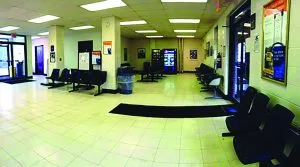
The new Niagara Falls Intermodal Transportation Center comes in at a total of 22,000 square feet.
The waiting area is undoubtedly several thousand square feet larger than what is required by Amtrak according to their guidelines.
Long-term trends do not bode well for the rail passenger industry. A 2007 report in Politico summarized the problem: “(T)he rail system chronically operates in the red. A pattern has emerged: Congress overrides cutbacks demanded by the White House and appropriates enough funds to keep Amtrak from plunging into insolvency. But, Amtrak advocates say, that is not enough to fix the system’s woes.”
Give or take a hundred million, Amtrak annually receives over $1.3 billion in federal government subsidies just to keep the trains running on time. According to the Dept. of Transportation website, New York State also chips in tens of millions to support various Amtrak routes across the state. While airlines and highways are also heavily subsidized, it’s difficult to imagine life without airplanes or cars, buses and trucks. Railroad passenger travel, not so much.
According to Amtrak’s fiscal year 2013 Comprehensive Business plan, “the backlog of needed repairs of the track it owns on the Northeast Corridor included over 200 bridges, most dating to the 19th century, tunnels under Baltimore dating to the Civil War Era and functionally obsolete track switches which would cost $5.2 billion to repair.”
Consider that, with the fact that Amtrak’s percentage of operating costs (expenses not including depreciation, amortization, interest charges, etc) covered by fares hovers around 80%, so without heavy government intervention in the form of subsidies, the service simply isn’t sustainable. How long the gravy train will last, and its implications for the new Intermodal Center and downtown Niagara Falls, remains to be seen.