New Report: Niagara Falls Has the Power. The Land. The Demand. Only One Thing Stands in the Way – Mayor Restaino
The Conflict
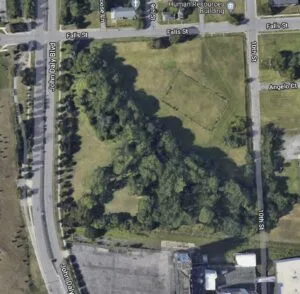
“Parcel 0” is a 10-acre parcel of land on the south side of downtown Niagara Falls, NY. Two projects want it for development. Only one project, at best, will be developed. Because of the fight, no one might develop at all. Parcel 0 might end up as it is now – just trees, grass, and brush.
The Owner
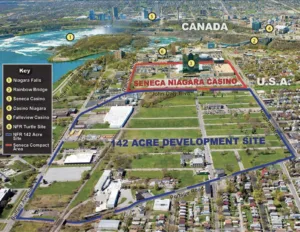
Niagara Falls Redevelopment LLC (NFR), owned by billionaire brothers Howard and Edward Milstein of Manhattan, has owned Parcel 0 and 130 contiguous acres for more than 20 years. The company has plans for a $1.5 billion data center on 53 acres of its land, including Parcel 0, which is at the road and is the entranceway to the land.
The Competing Vision
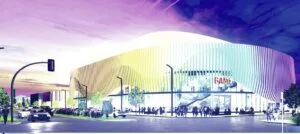
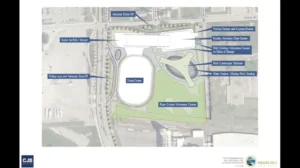
Niagara Falls Mayor Robert Restaino also wants Parcel 0 to build an arena with 7,000 seats, a skating rink, a splash pad, a parking ramp, and a few acres of green. He does not need all of NFR’s land – just Parcel 0 – the entranceway. By taking it, he would block NFR’s project since road access is essential for the project NFR wants to build. Mayor Restaino has taken NFR to court to take Parcel 0 through eminent domain.
NFR’s Digital Campus Proposal
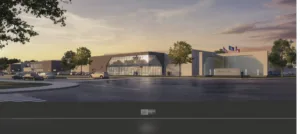
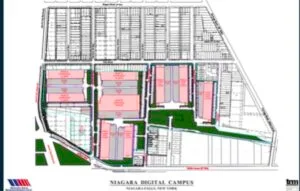
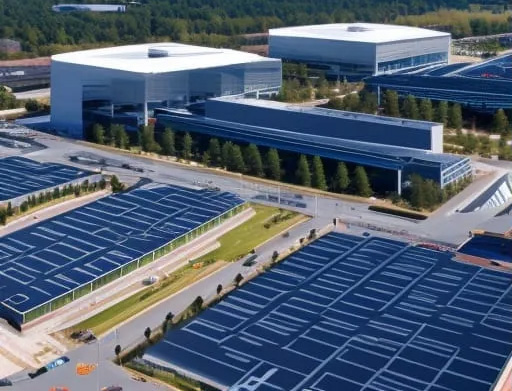
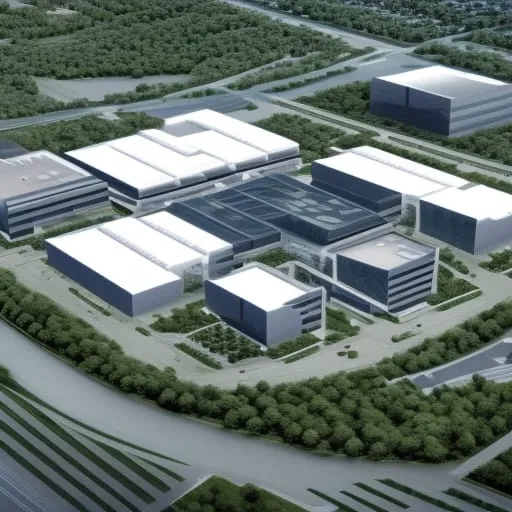
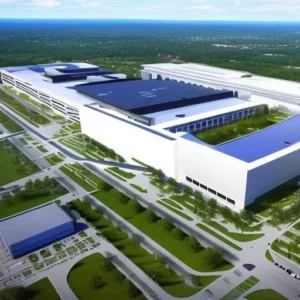
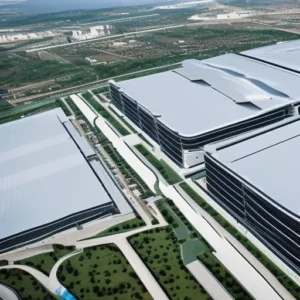
NFR has been reluctant to abandon its project — the Niagara Digital Campus. Plans filed with City Hall detail the project: nine buildings — eight of them two-story, one a single story, with a total of 1.2 million square feet. NFR will partner with Urbacon, a Canadian developer of data centers, to construct the project entirely with private money.
What a Data Center Is
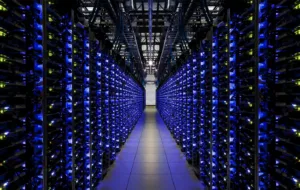
From the street, it will look somewhat unassuming; a complex of buildings, windowless, encased in steel and fiberboard, with cameras blinking from the corners. The buildings will be leased to tenants. This is not office space. These are digital tenants: Amazon. Google. Microsoft. Banks. Streaming services.
Inside the buildings, there will be tens of thousands of servers stacked in corridors. Each machine is calibrated to a precise temperature — 67 degrees. Wires run beneath the raised floor and above the ceiling in cable trays to carry data at nearly the speed of light. Behind the panels, they store cloud. They power companies, run models, move money. Everything a person might see, save, or search for — photos, documents, profiles, passwords, maps, money — passes through those machines. Artificial intelligence, cloud processing, banking algorithms. Streaming vaults. Voice-to-text and machine learning — wrapped in fire suppression and fiber cable. Steel-framed, sealed in insulated panels.
For tenants, it is a safe space for high-tech storage, for transmission of banking transactions, patient records, shipping logistics, tax filings, movie streams, military encryption, artificial intelligence, surveillance archives, and satellite telemetry. Stock trades executed in nanoseconds.
Every click, every card swipe, every “search”—passes through machines like those to be built, if it is built, at the Niagara Digital Center.
Electricity
To exist, a data center must be fed. Electricity is its currency. Power is its lease. Tenants—AI companies, banks, cloud giants, streaming platforms—do not ask how much floor space they receive. They ask how many megawatts they can buy. One. Ten. Thirty.
They pay to be fast. To be close to the grid. To be close to the border. To run without failing. NFR has found a way to offer an astounding 140 megawatts of continuous power at its digital center.
The entire residential base of Niagara Falls uses around 25 to 30 megawatts of continuous power. Add in commercial and municipal use;, and the city might use 50–60 megawatts total. This project will use 140 megawatts – more than double the entire city
Power Supply Is Massive
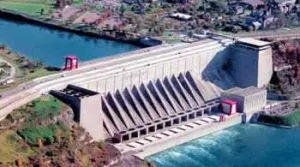
The Niagara area is home to the Robert Moses Niagara Power Plant, operated by the New York Power Authority. That facility produces about 2,600 Megawatts of electricity — every day. That’s more than 18 times the power the data center needs. It’s also enough to power millions of homes. NFR isn’t just plugging into the wall. They are investing tens of millions into a new substation to handle its 140-megawatt load.
National Grid Confirms Capacity
In filings and project planning, National Grid has confirmed adequate capacity in Western New York’s energy grid to support this project. The Niagara Digital Campus might draw more power than the city combined. But it won’t dim a lightbulb. It won’t raise prices. It may keep rates from rising.
“This is smart growth,” said Dennis Elsenbeck, formerly with National Grid, a consultant on the project. “This allows us to kickstart the tech corridor,” which means Niagara Falls and surrounding areas like Buffalo, Lockport, maybe as far as Rochester.
Elsenbeck said the data center would expand the city’s base of ratepayers, creating downward pressure on future electric rates.
“This is how you broaden the ratepayer base,” he said. “How you stabilize electric rates.”
Faster Internet
In addition to electricity, the project would bring state-of-the-art, high-bandwidth fiber lines to the site—capable of handling massive volumes of data with low latency (the time it takes for data to travel from one point to another). If local internet providers tap into these lines, internet speed in Niagara Falls should improve.
Economic Impact
Jobs, Revenue, and Taxes
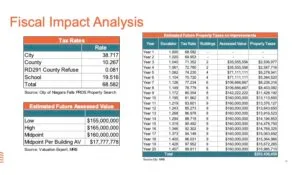
The biggest impact of the Niagara Digital Campus is economic. On March 25, NFR released a 24-page economic impact study by MRB Group. Because the project would consume 140 megawatts of electricity, it is expected to return $3 to $5 million annually in energy sales tax to the city.
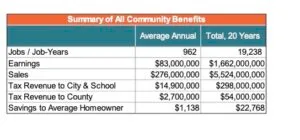
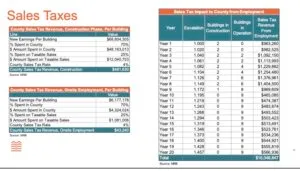
In addition, the project would provide approximately $7 million per year in property taxes.
Over 20 years, the project will generate $414 million in new tax revenue:
- $298 million to the city and school district
- $54 million to Niagara County
- $63 million to New York State
For the average Niagara Falls homeowner, that could mean $730 in annual savings.
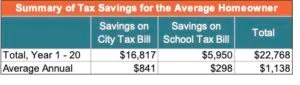
Because Niagara Falls is designated a Disadvantaged Community, the city may receive up to $9 million annually in infrastructure credits—funds redirected from Albany to support substations, transmission lines, and grid reinforcements built by NFR.
Jobs and Wages
According to the MRB report:
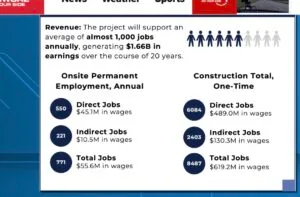
- The project would create 550 permanent, high-paying jobs: electricians, engineers, analysts, network, and security professionals.
- One thousand seven hundred additional jobs would stem from ancillary businesses such as maintenance and security services.
- More than 5,600 construction jobs would be created during the buildout.
- In total: 19,000 job-years over two decades.
- More than $1.6 billion in wages would be paid out.
The project’s annual economic activity is projected to be $250 million. Roger Trevino, executive vice president of NFR, called it “the best investment the city can make.”
Dennis Elsenbeck added, “Done right, this initiative will bring an unprecedented level of economic opportunity to a city where it’s desperately needed.”
Quiet Project
Generally speaking, a data center is not a loud neighbor, even with its heavy computing load. A Noise Feasibility Study for the proposed facility will show that modest mitigation measures—such as sound barriers and strategic equipment placement—would keep noise levels low. At the boundary lines, the sound would be no louder than a dishwasher behind a kitchen door and quieter than nearby traffic. Outside the building: Most noise would come from cooling equipment, such as chillers, rooftop fans, backup generators, and HVAC systems.
Inside the building: Noise levels could reach 80–90 decibels—comparable to a vacuum cleaner—due to the hum of servers and cooling fans. However, that sound would be contained within insulated, windowless, and secure buildings, posing no disturbance to neighbors.
This project brings hundreds of millions in investment, jobs, and stabilized electric rates—all without costing taxpayers a dime. The developers are asking for nothing more than permission to build on their land.
Eminent Domain
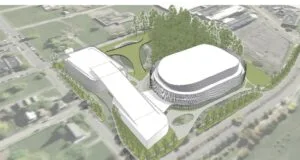
But Restaino is in earnest. He d0es not want this data center to happen. He may do his best to build his arena and he may fail but at least he will try his best to stop the data center.
In 2022, he sued NFR under eminent domain. In 2023, the court ruled the city had the right to take Parcel 0 — if Niagara Falls taxpayers paid “just compensation” to NFR. Normally, “just compensation” means what the land is worth today as it stands. But Parcel 0 isn’t just a vacant lot—it’s the gateway to a $1.5 billion project. If Parcel 0 is taken, the data campus falls apart.
The courts will decide if the land should be valued like a regular ten-acre lot or include the value of everything the company will lose—e lost profits, lost investment, “consequential damages.”
Each side hires appraisers. Experts testify. It can take years for the court to decide. Restaino may no longer be mayor when the price is established. If the city can’t afford the price? It’s stuck. It can’t build the arena, owes money, and killed a project that might have brought millions in taxes.
Behind it all—the city does not have the money for even the down payment. Restaino talked about borrowing money to hold the land he has tied up in litigation. He considered cutting street repairs and demolitions—for 20 years to make it work. Even if it’s just the land, the cost of Parcel 0 might be $25 million based on the price land across the street taken in eminent domain more than a dozen years ago cost the state.
But if it’s the gateway to a billion-dollar private project, if denying it kills a development projected to generate $414 million in tax revenue, then the price might be $100 million.
The Way to Success
Ironically, there is a solution. If built, the tax revenues from NFR’s data center could finance Restaino’s Centennial Park – but at a different site. A solution that would allow both projects to be built – though skeptics say no study shows the city even needs an arena. If the Mayor let NFR build, the increased tax revenue could fund the arena.
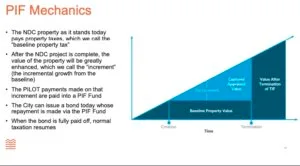
Mayor Restaino can finance Centennial Park through the Niagara Digital Campus. But he would have to locate his arena elsewhere. The mayor could do a site selection study – something he has yet to do – to determine the best location.
If built, the Niagara Digital Campus will pay more than $400 million in taxes over 20 years. Through a PILOT program, the city could issue a 20-year bond paid through the taxes from the Data Center.
Why not Niagara Falls?
It has the power. It has the land.
There is only one thing working against it– Mayor Robert Restaino. Maybe it’s time to compromise and let the future –digital space, AI – go through the door.