Niagara Falls
THE
NIAGARA FALLS REPORTER
LOCAL NEWS  •  LOCAL VOICES  •  LOCAL MATTERS

National Fuel: New York Consumers To Get Rate Increase While Pennsylvanians Get Decrease
S
Staff  ·  May 5, 2016
National Fuel: New York Consumers To Get Rate Increase While Pennsylvanians Get Decrease
SharefXin
by James Hufnagel

National Fuel supplies natural gas to over 730,000 residential and corporate customers throughout Western New York and northwestern Pennsylvania. The Williamsville, NY-based oil and gas concern is vertically integrated across five business divisions: Exploration & Production, Pipeline & Storage, Gathering, Utility, and Energy Marketing, all operating largely within the Buffalo metropolitan area.

National Fuel filed a request late last week with the New York State Public Service Commission to increase utility base rates for New York customers. If approved, it will result in a 7.2% increase in delivery rates, an additional $5.75 a month on a typical gas bill, from approximately $80 to $85.75.

The price hike is projected to enhance National Fuel’s annual revenue by $41.7 million a year, a 7.9% boost to its bottom line.
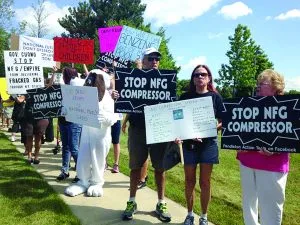
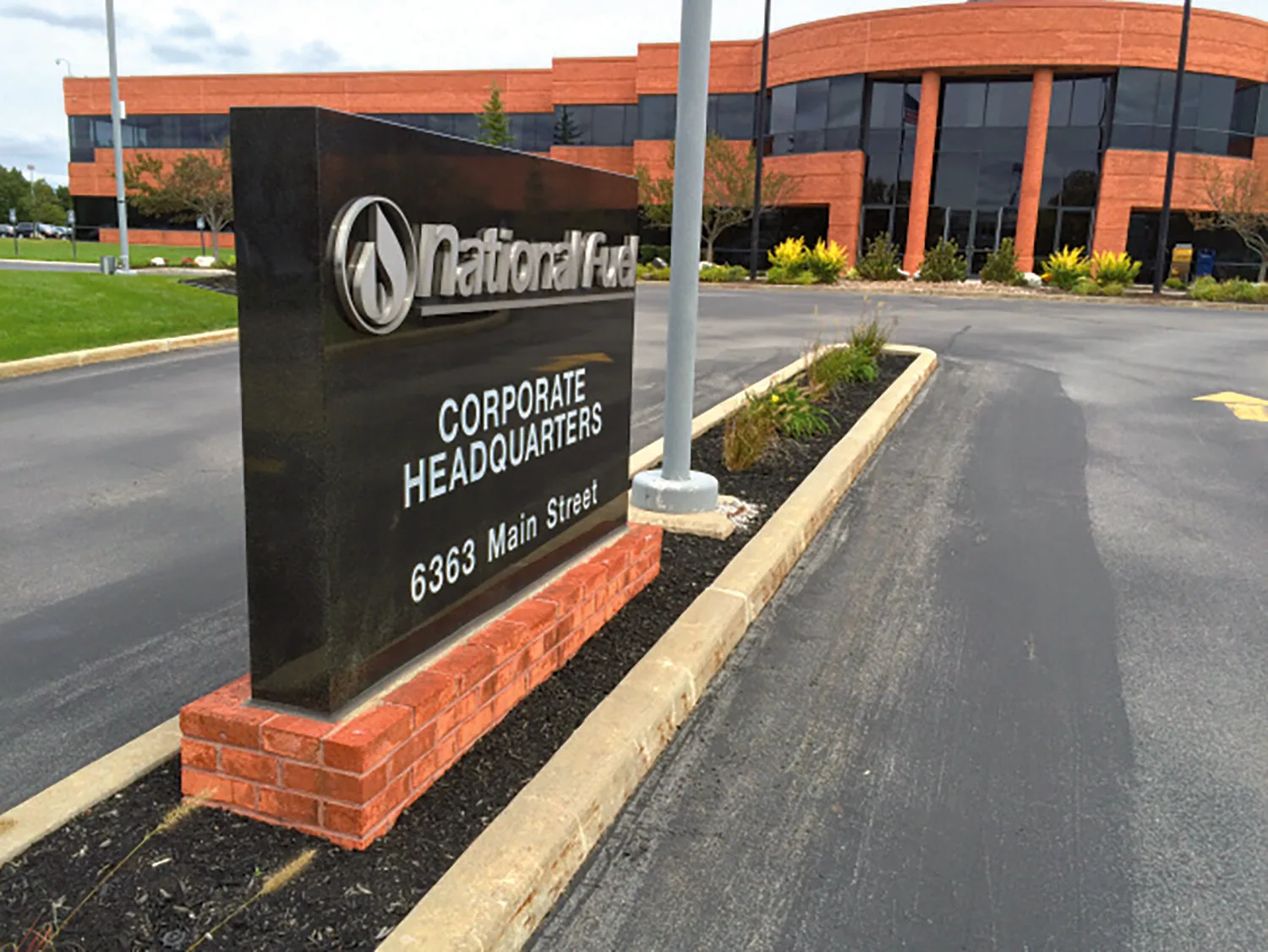
National Fuel’s sprawling campus in the north suburbs (left) has been a frequent target of protests over the years, over fracking, consumer policies and more recently, the construction of obtrusive pipelines through the small towns and farms of Niagara County.

At precisely the same time National Fuel was petitioning for a rate increase in New York, it was acting to lower rates in Pennsylvania. On Friday, National Fuel submitted an application to the Pennsylvania Public Utility Commission seeking to lower consumer and business gas supply charges by 6.46%. Taking immediate effect on Monday, May 1, the average Pennsylvania gas bill was reduced by $3.46, from $53.55 to $50.09.

National Fuel justified the New York increase in an April 28 press release, pointing out that the upward adjustment will be the first time it has increased utility base rates in more than 9 years, since 2007, “…its customers not experiencing any delivery rate increase for nearly 10 years… Key components of the rate proposal are the continued system modernization of National Fuel’s pipeline infrastructure…”

On the other hand, the very next day, a second press release reassured Pennsylvanians that their gas prices would remain unchanged: “National Fuel hasn’t sought to increase the delivery service charges paid by its residential customers in more than 8 years, even while consistent investments in pipeline safety and system modernization have continued.”

To summarize, National Fuel’s business policies appear to reflect “a tale of two states”. A natural gas price increase is levied on Western New York, the stated purpose of which is to underwrite modernization of pipelines, while rates are lowered in Pennsylvania, where pipeline modernization is continuing unabated, as laid out in two press releases issued within 24 hours of each other.

As a top fracker, National Fuel has lately been victimized by its own success. Gas drillers have extracted so much of the fossil fuel from the Marcellus Shale formation in Pennsylvania that a massive supply glut has resulted, depressing prices and negatively impacting the company’s net income. In fact, National Fuel reported a consolidated net loss of $147.7 million, or $1.74 per share, for the 2nd quarter of 2016 alone, its Exploration and Production (fracking) segment hemorrhaging capital.

In spite of this recent poor performance, shareholder dividends have risen every year for the past five decades, including a 2015 $1.58 per share dividend and a quarterly dividend of $0.395 paid last month. Clearly, National Fuel has chosen to finance the “continued system modernization of National Fuel’s pipeline infrastructure” at the expense of New York (not Pennsylvania) ratepayers, rather than inflict dividend cuts on its investors.
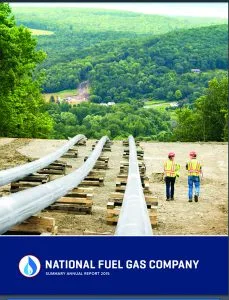
The cover of National Fuel Gas’ 2015 annual report shows a pipeline running directly into a scenic rural town and two helmeted workers walking along it for perspective.

It’s no secret that National Fuel intends to pick up its long-term financial slack by exporting fracked gas to Canada, and to accomplish that goal, is implementing an aggressive build-out of pipeline through Niagara County communities, to appreciable pushback from local citizen groups including the Pendleton and Wheatfield “Action Teams”, together comprising nearly a thousand members on Facebook. National Fuel is on the verge of constructing a noisy 22,000 horsepower compressor station in the town of Pendleton and a carcinogen-emitting dehydration station in Wheatfield to support its Canadian pipeline link.

Of course, this is the “pipeline infrastructure modernization”, cited repeatedly in National Fuel annual reports, press releases and on its web site, that it intends to complete on the backs of New York, but not Pennsylvania, ratepayers.

SharefXin

Comments (0)

Leave a comment

More From Niagara Falls Reporter

Craig Bucki Stands Out in Race for Supreme Court, Has All the Tools to Be Strong Judge
Featured

Craig Bucki Stands Out in Race for Supreme Court, Has All the Tools to Be Strong Judge

By tony Farina · September 16, 2026

By Tony Farina I’ve covered many court proceedings and trials in my more than 35 years as a newspaper and television reporter and I want to make the point at the beginning of this story that whether elected or appointed, some judges are fair and honest and many others fall short of the mark. In other words, the word jurist does not convey skill and knowledge of the law; it is just a role that some serve with distinction, and others do not. By definition, a jurist is a person who has expert or thorough knowledge of the law but

Is Niagara Falls Crisis Self-Inflicted? Lots of Questions, Few Answers
Featured

Is Niagara Falls Crisis Self-Inflicted? Lots of Questions, Few Answers

By tony Farina · September 15, 2026

By Tony Farina There are certainly many questions swirling around the mayor’s declaration of a state of emergency in Niagara Falls over trash, blight, and deteriorating streets that was declared back on July 20 and has been extended several times since because, according to Mayor Robert Restaino, the City Council refused to approve contractor agreements. But some observers point to depleted staff at City Hall, like in Public Works and Code Enforcement and other departments, as really self-inflicted wounds that are the underlying reasons work is not getting done in the city. Or is there even more to the story,

NIAGARA FALLS BUILT THE MODERN WORLD ON ITS POWER. IT CAN DO IT AGAIN.
Featured

NIAGARA FALLS BUILT THE MODERN WORLD ON ITS POWER. IT CAN DO IT AGAIN.

By Niagara Reporter- · September 11, 2026

The  Data Center That Answers Hochul’s Objections There was a time when Niagara Falls did not ask Albany whether it was permitted to prosper. The river was here. That was enough. The town had something Albany couldn’t give it. It used what was here. Water. Power. Work. Jobs. Industry. A future. In 1895, the Adams plant took the river and put it into wire. The current went to Buffalo. It changed the industrial world. Tesla supplied the designs. Westinghouse built the machines. Niagara supplied the falling water. Then industries came. Electrochemical. Electrometallurgical. They came because Niagara offered abundant, inexpensive electricity.

Niagara Falls Has Millions of Tourists But Needs to Find a Way to Capture That Wealth
Featured

Niagara Falls Has Millions of Tourists But Needs to Find a Way to Capture That Wealth

By tony Farina · September 8, 2026

By Tony Farina The City of Niagara Falls, N.Y., boasts one of the world’s greatest natural wonders that people from around the world come to see, but despite incredible tourism numbers of more than nine million visitors a year, the city of now less than 50,000 people is still pretty darn poor. Niagara Falls does not have a tourism problem; it has a tourism-capture problem, and the distinction should be a starting point for a serious new discussion about the city’s future. And ladies and gentlemen, that discussion needs to start now. The question is no longer whether Niagara Falls