Local History reflects Rich Religious Heritage
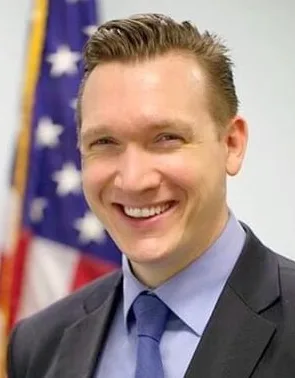
By Nate McMurray
Grand Island Town Supervisor
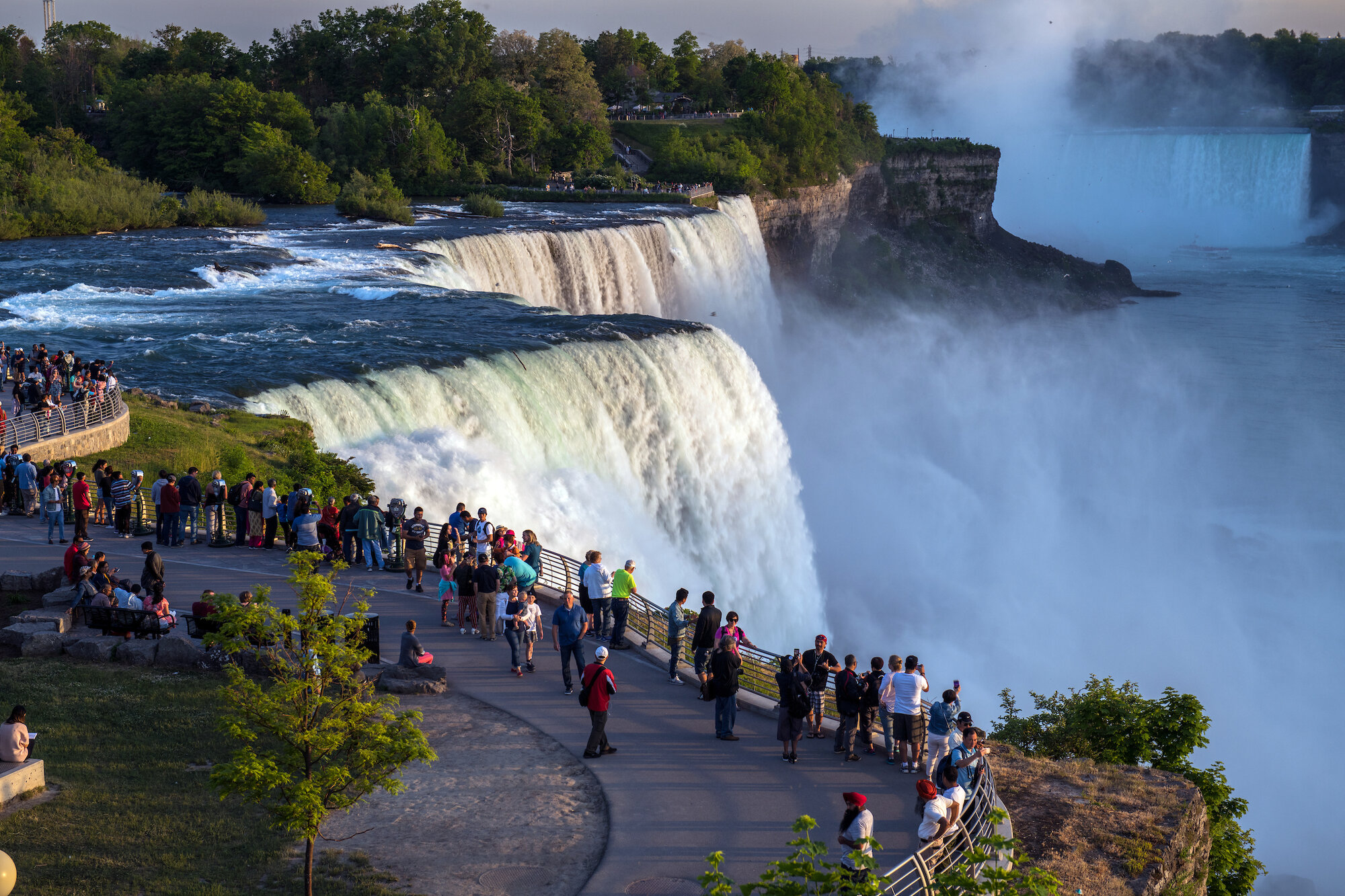
Right here, in Western New York, we are surrounded by history. Great minds—from Nikola Tesla to Frank Lloyd Wright and Mark Twain—came here to use their talents and contribute to the thriving Queen City. The Falls, with all of its beauty and potential, was a magnet for visionaries and dreamers seeking to build a better life—a Utopia.
One of those dreamers was a man named Mordecai Manuel Noah. He was a businessman, lawyer, diplomat and playwright. His biggest and most far-fetched goal was to establish a homeland for the Jewish people (who were already being persecuted in Europe in the 1800s) on Grand Island called “Ararat.”
Noah failed miserably. Although he bought a cornerstone (it sits in the Buffalo and Erie County Historical Society today) and acquired property rights on Grand Island, he never actually set foot here. He made it to the shores of Tonawanda, where he expressed his intentions with much fanfare and a parade, but the closest Ararat ever actually came to being erected was a set of old stones placed near what is now Whitehaven Road on Grand Island. Some creative huckster called it “The Lost City of Ararat” to attract tourists on their way to Niagara Falls.
Noah was part of a broader historical movement that is largely forgotten today. Western New York was full of religious fervor in the 1800s. There were so many new religious movements that the area from Buffalo to the Finger Lakes was called the “Burnt Over District” because so many people had been “burnt” (converted) to new faiths. The Jehovah’s Witnesses, the Seventh-Day Adventists, and even the Shakers (who shook dramatically in fits of spiritual excitement), and other religions (many based on local superstitions and folk beliefs mixed with Christianity) all started at that time, right around here.
Another religion that started right then was the Latter-Day Saints, or Mormons. The Mormons were led by a charismatic young man named Joseph Smith. He took Christianity and mixed it with a then-growing belief that the Native Americans were actually part of the lost tribes of Israel. Mordecai Noah actually played around with the same idea—which we now know, because of modern genetics, is highly dubious, to say the least.
But as I learned studying the Bible as a child, “Faith is the substance of things hoped for, the evidence of things not seen.” You see, I was raised a Mormon. It was a powerful thing for a young man to be part of and it taught me many good habits. My father passed away when I was young, and my mother raised all seven of us alone. The Mormon church (and the good men in it who acted as father figures) helped give me a sense of community, a sense of purpose, and a desire to sacrifice selfish pursuits to be part of something greater than myself.
But as another fellow Buffalonian and contemporary of Joseph Smith, Mark Twain, once said, “You cannot pray a lie—I found that out.” And after a life in the Mormon Church, I started to have doubts in my early twenties. My doubts were not so much about individual doctrines—I find it troubling when religious people of any faith mock the religions of others, because under objective scrutiny many of our beliefs look strange. Instead, my angst came primarily from the church’s desire to exclude others from their community—specifically the animosity toward homosexuals and women seeking leadership positions in the faith.
This period led me to a 10-year exploration of religious doctrine and introspection. I had an internal “burnt over” period in my heart, where I visited shrines in India, churches in Memphis, and temples in Korea and Japan. This journey did not give me a sense of peace, but only more questions. I once slept in a temple, cleaning floors, eating mountain herbs, only to accidentally witness a monk privately blasting Led Zeppelin on a state-of-the-art sound system in his quarters. Was it wrong? No. But after all his preaching about sacrifice, it sure did not seem right.
Recently I visited Utah. Flying in over the Great Salt Lake is awe-inspiring. Those arid yellow mountains combined with that teal lake, touched with white salt at its edges, looks like some alien shore. I thought back to my roots, and those Mormon pioneers who started here in New York, but were chased from this land of fresh water lakes and groves of maples and oaks to the unforgiving desert.
Yet they thrived. Today Utah is booming. And Mormonism, according to many, is the fastest-growing religion in the world. As I walked the streets of Temple Square in Salt Lake City, as somewhat of an outsider now, and heard the hymnal music of my youth again, I felt it. That desire to be good, and do good.
But I feel that inspiration in the churches I visit on Grand Island too. As Supervisor, I have been honored to visit so many places of worship. I often say going to a church you are not familiar with is a bit like eating over a friend’s house—the chicken just does not taste quite right. But I’ve learned there is a lot you may like too. Your friend’s mom may make a heck of a tuna casserole.
And I know, having lived in a home where my mother (a converted Mormon who grew up Catholic) always kept a statue of the Virgin Mary in her room, that we can sometimes hold multiple beliefs at once. Further I know that a man who operates a shrine of a god with the head of an elephant in Delhi can act as Christ-like as any person you have met as he grabs your sleeve and leads you to safety through streets of diesel fumes and confusion.
Joseph Smith may have formed the Latter-Day Saints, but he was no saint. Neither was Mordecai Noah. Neither was George Washington for that matter. All of these men, when held up to the scrutiny of modern day understanding and values, look terribly flawed. I believe that individuals who primarily represent beliefs that are repugnant to us today—like slavery—should not be celebrated. But there were varying degrees of greatness in the men I mention above, despite their flaws. And there was certainly greatness in the faith I grew up in, a faith I identify with and feel a kinship for even today.
To some of us, this forgotten history of Western New York as a mecca for spirituality may seem distasteful or strange, but I think it would be a mistake not to celebrate it and take from it the most pure and precious parts. There must have been something special about our region to inspire so much creativity, and the passion to connect to the divine and transcend this terrestrial realm. I’m convinced it was more than just the economic factors of the day that led to such fervor.
This is a special place: a place full of hope. You can feel it in the whispering wind in the trees in summer and the solemnity in the falling leaves in autumn. It’s the type of place where an outsider can dream of creating a safe haven for his people on a beautiful Island. It’s the type of place where a boy in the woods can claim to see God and start a religion that starts a state.