Niagara Falls
THE
NIAGARA REPORTER
LOCAL NEWS  •  LOCAL VOICES  •  LOCAL MATTERS

Little Evidence To Support City’s Link With Underground Railroad
M
Mike Hudson  ·  March 24, 2016
Little Evidence To Support City’s Link With Underground Railroad
SharefXin


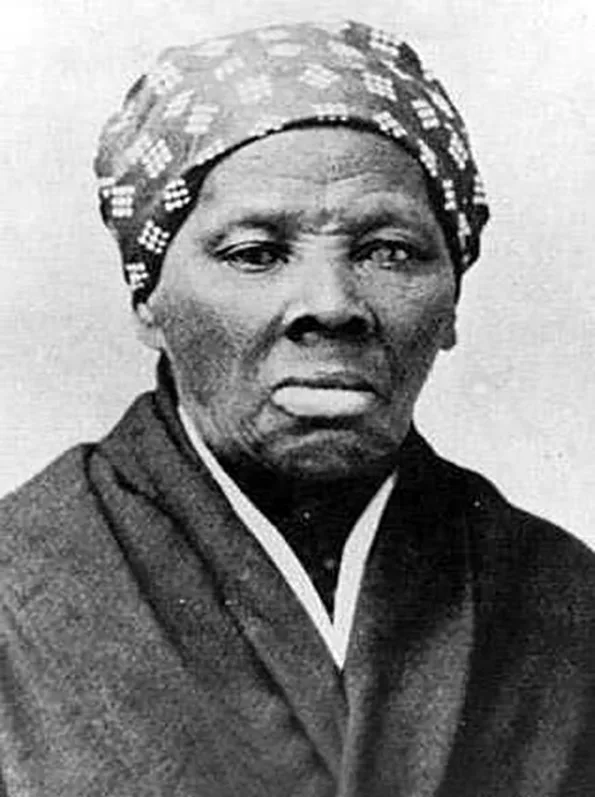
The number of famous people who have visited Niagara Falls includes George Washington and Abraham Lincoln, British royalty from King George V to Lady Di, literary figures such as Jack London, Oscar Wilde and Harriet Beecher Stowe, movie stars like Marilyn Monroe and many more. There is nothing to commemorate their visits, no plaques or markers, and any of the buildings where they may have stayed, had a meal or bought a souvenir were demolished under the city’s colossally misguided “Urban Renewal” program of the 1970s. It is something more than ironic then that City Council approved spending $262,000 to dedicate a park and erect a statue to a a woman who by all accounts never set foot in Niagara Falls, Harriet Tubman. The city’s actual role in the Underground Railroad movement is a speculative one. A study conducted by the city’s Underground Railroad Commission in conjunction with Niagara University, was unable to identify a single site in the city with any undisputable connection to the Underground Railroad, which assisted escaped slaves from Southern states in getting to Canada or some other destination where they could live free. Harriet Tubman’s connection to what is now the city of Niagara Falls is tenuous. According to one paragraph in Scenes of the Life of Harriet Tubman by children’s book author Sarah Hop-kins Bradford, Tubman accompanied a relative on a train that crossed the Suspension Bridge, near where the Whirlpool Bridge stands. By her account, the train didn’t stop, but simply crossed the Niagara. The book itself makes great use of what critics have called “artistic license” and a “highly subjective point of view” and is, in fact, riddled with many provable factual errors. But this is Niagara Falls. And our city’s mayor, Paul Dyster, thinks spending $44 million on a new passenger train station to service the fewer than 70 riders who get off or get on a train each day here is a necessary and prudent investment. By extension, spending $262,000 to dedicate an adjacent park to and erect a statue of a woman who may or may not have once passed through the vicinity on board a train may not seem all that outrageous after all.
The number of famous people who have visited Niagara Falls includes George Washington and Abraham Lincoln, British royalty from King George V to Lady Di, literary figures such as Jack London, Oscar Wilde and Harriet Beecher Stowe, movie stars like Marilyn Monroe and many more.
There is nothing to commemorate their visits, no plaques or markers, and any of the buildings where they may have stayed, had a meal or bought a souvenir were demolished under the city’s colossally misguided “Urban Renewal” program of the 1970s.
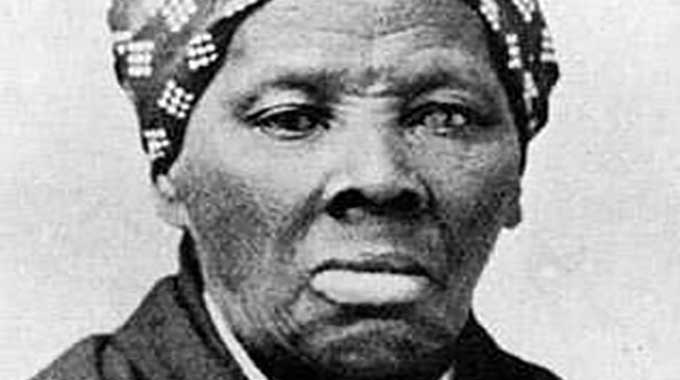
It is something more than ironic then that City Council approved spending $262,000 to dedicate a park and erect a statue to a a woman who by all accounts never set foot in Niagara Falls, Harriet Tubman.
The city’s actual role in the Underground Railroad movement is a speculative one. A study conducted by the city’s Underground Railroad Commission in conjunction with Niagara University, was unable to identify a single site in the city with any undisputable connection to the Underground Railroad, which assisted escaped slaves from Southern states in getting to Canada or some other destination where they could live free.
Harriet Tubman’s connection to what is now the city of Niagara Falls is tenuous.
According to one paragraph in Scenes of the Life of Harriet Tubman by children’s book author Sarah Hop-kins Bradford, Tubman accompanied a relative on a train that crossed the Suspension Bridge, near where the Whirlpool Bridge stands. By her account, the train didn’t stop, but simply crossed the Niagara.
The book itself makes great use of what critics have called “artistic license” and a “highly subjective point of view” and is, in fact, riddled with many provable factual errors.
But this is Niagara Falls. And our city’s mayor, Paul Dyster, thinks spending $44 million on a new passenger train station to service the fewer than 70 riders who get off or get on a train each day here is a necessary and prudent investment.
By extension, spending $262,000 to dedicate an adjacent park to and erect a statue of a woman who may or may not have once passed through the vicinity on board a train may not seem all that outrageous after all.

Is the decision by the city’s Underground Railroad Commission to broaden the scope of what was to have been the Underground Railroad interpretive center at the Whirlpool Street train station a tacit admission that Niagara Falls has little if any Underground Railroad history of its own to begin with?

Niagara Falls didn’t exist as a municipality until March 1897, more than 34 years after Abraham Lincoln signed the Emancipation Proclamation, effectively freeing the slaves. And while Lockport, Pekin, Youngstown and especially Lewiston have well documented associations with the Underground Railroad, exhaustive efforts over the past few years have failed to turn up anything similar in the city.

The commission hired two Niagara University academics to produce the Niagara Falls Underground Railroad Heritage Area Management Plan, an otherwise unremarkable bureaucratic document, brimming with the sort of demographic, geographical and historical detail that can be easily found elsewhere.

Those seeking to learn anything from the report about actual activity by the Underground Railroad on land that would one day long afterward become the city of Niagara Falls should not be daunted by its great length, since the first 50 or so pages deal exclusively with things having nothing to do with the Underground Railroad.

When the determined reader finally gets to the parts that do have to do with the Underground Railroad, he is struck by the vagueness of the language used.

“Almost certainly,” “There can be little doubt,” “It’s likely that,” “Almost all,” “This suggests,” “Reputedly” and “Perhaps as many as” and other modifiers preface nearly every declarative sentence.

In sum, the study failed to come up with a single unequivocal site to link to Underground Railroad activity, or the name of a single resident of the area that would later become the city of Niagara Falls who could be associated with the clandestine organization.

While the Michigan Avenue Baptist Church in Buffalo, the First Presbyterian Church in Lewiston, the Thomas Root House in Pekin, the Abijah Moss House in Lockport and the Murphy Orchards Farm in tiny Burt all have proven associations with the Underground Railroad, Niagara Falls is bereft of any such location.

In fact, the sole place in the city that may have a tenuous connection to the Underground Railroad is the site of the former Suspension Bridge, a few hundred yards from the present day Whirlpool Bridge.

According to the book “Scenes From the Life of Harriet Tubman,” which was passed off as the illiterate Tubman’s autobiography but was actual-ly written by a children’s book author named Sarah Hopkins Bradford, Tubman once passed through what in now the city’s North End as a passenger on a train bound for Canada.

Tubman, known as the “Moses of Her People” based largely on the assertions in Bradford’s book, was associated with the Underground Rail-road and, in all, is said to have led between 19 and 70 escaping slaves from her home state of Maryland mostly up the East Coast and through Boston to freedom in Canada.

Given the thinness of the evidence linking the present day Niagara Falls to the activities of the Underground Railroad, it is unsurprising that the Underground Railroad Commission would opt to focus its attention to later developments that would one day lead to the high percentage of African American residents here.
SharefXin

Comments (0)

Leave a comment

More From Niagara Falls Reporter

Niagara Falls Hosts Oldest State Park But State Needs to Provide More Assistance
Featured

Niagara Falls Hosts Oldest State Park But State Needs to Provide More Assistance

By tony Farina · August 26, 2026

By Tony Farina The Niagara Falls State Park, located in Niagara Falls, N.Y., and created in 1885, is recognized as the oldest state park in the U.S. and contains the American Falls, the Bridal Veil Falls, and a portion of the Horseshoe Falls (also known as the Canadian Falls). Following a $44-million refurbishment of the 221-acre park in 2003, in 2007 it was named the 10 th most beautiful spot in America by “The Today Show.” According to the state’s Office of Parks, Recreation, and Historic Preservation, the State Park receives more than nine million visits each year. It is

Featured

WEBR to Launch Katie Daye Show on Monday

By tony Farina · August 21, 2026

By Tony Farina There is much excitement in the airwaves at WEBR The Breeze as station manager and program director Frank Miller has announced that beginning on Monday, Aug. 24, the talent he has been hoping to bring in for some time will be joining the WEBR midday lineup from 10 a.m. to 2 p.m. every weekday. “We’re just thrilled to be launching the Kadie Daye show on Monday, and we are so looking forward to having a talent like Kadie on our airwaves at WEBR AM 1440, FM 105.3 and FM 106.9,” Miller said in talking about the new

Far Too Often, Promises Have Proved Empty; Niagara Falls Needs Progress And Strategic Planning
Featured

Far Too Often, Promises Have Proved Empty; Niagara Falls Needs Progress And Strategic Planning

By tony Farina · August 4, 2026

By Tony Farina Promises are nice and they bring hope for the future. But unfortunately, most of the time, promises have fallen flat for the City of Niagara Falls, some succeeding but many turning out to be empty promises and major disappointments. At this point, Niagara Falls doesn’t need more failed promises. What the city needs is progress to build a better future and a plan to make it work. City leadership must bring it all together. While there are promises to build a better future on the table and being talked about, like Centennial Park and the Niagara Digital

Governor Issues Response To McMurray’s Letter on Slag Concerns
Featured

Governor Issues Response To McMurray’s Letter on Slag Concerns

By tony Farina · August 4, 2026

By Tony Farina The radioactive slag bubbling up across Niagara County in recent weeks, triggering state and federal testing and some remedial work and family relocations, is the ongoing and seemingly never-ending legacy of the environmental desecration of the past 100-plus years by massive corporations dumping toxic waste that was the subject of Christen Civiletto’s book Thundering Waters. “What we have again is an environmental storm,” said attorney and former Grand Island Supervisor Nate McMurray, a candidate for election to the 45th District State Assembly seat now open because of the retirement of Angelo Morinello. McMurray will run for the