Greed, Corruption & Cover-Up At The NSA
Burning Books to screen documentary about whistleblower Bill Binney
By Jordan Canahai
Tuesday 9:47am: Hi baby, you have to listen to me carefully—I’m on a plane that’s been hijacked. I’m on the plane; I’m calling from the plane. I want to tell you I love you and tell my children that I love them very much, and I’m so sorry babe. I don’t know what to say—there are three guys and they’ve hijacked the plane. I’m trying to be calm but it’s turned around and I’ve heard there are planes that have flown into the World Trade Center. I hope to be able to see your face again, baby. I love you. Goodbye…
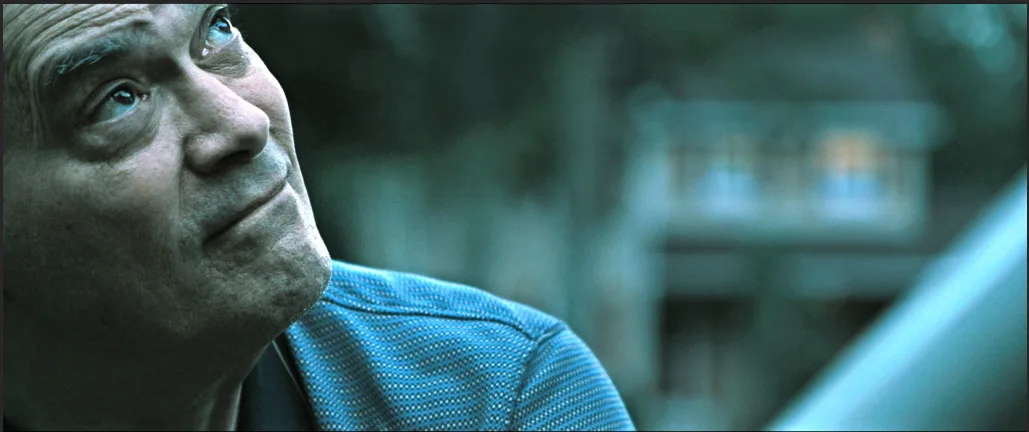
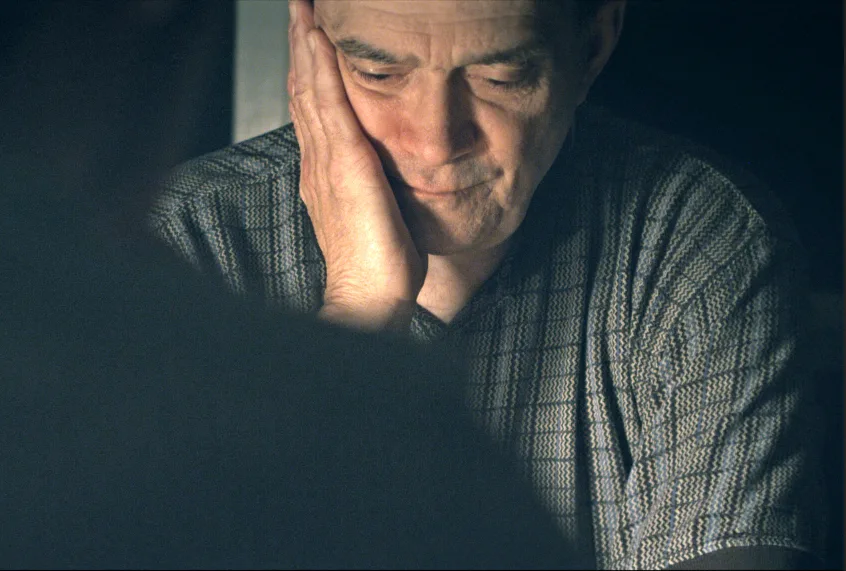
A Good American opens with this cell phone recording of a frightened woman tearfully speaking these words on September 11, 2001. The film cuts to a profile shot of a sullen Bill Binney as he wearily but pointedly recalls horrific images from the World Trade Center on that fateful day. “The one’s that affected me the most were the people diving off the building when it was burning. To be put in such a desperate state shows you the human reaction to those kinds of conditions. It was just revolting, and disgusting basically that we allowed it to happen.”
Binney is a former highly placed intelligence official for the National Security Agency turned-whistleblower, as well as the subject of director Friedrich Moser’s fascinating, provocative documentary A Good American. If what Binney and Moser’s documentary suggests is true, then not only should the NSA leadership have been able to prevent the terrorist attacks of 9/11, but their failure to do so was caused by arrogance, corruption, and greed of the highest order, all of which the agency has attempted to cover-up in the following years.
In documenting Binney’s and others dealings with Military and National Security higher-ups, Moser unfolds one shocking revelation after another. Binney’s NSA colleague Thomas Drake at one point recalls how a Senior Military Officer dismissed Osama bin Laden as “a raghead spouting off about a fatwa in the desert” in response to their intelligence reports on Al Qaeda in the late 90s. After the events of 9/11, Drake quotes his former NSA boss Maureen Baginski who reportedly said “9/11 was a gift to the NSA, we’re gonna get all the money we need and then some.”
Utilizing recent footage of Binney, straight-to-camera talking head interviews with him and his colleagues, and various news media excerpts, Moser’s documentary recalls the work of Errol Morris in both style and subject matter. But while A Good American focuses largely on conspiracy theorizing and the specifics of Binney’s claims, Moser also explores the life and career of his subject using the man’s own words as well as those close to him.
The proud son of a WWII veteran, Binney grew up in Pennsylvania and studied Mathematics, his lifelong passion, at Penn State University. He volunteered for the Army during the Vietnam War, where his skills as a mathematician made him a proficient analyst and code breaker. Binney and Moser frequently return to the subject of Vietnam to reflect on how the Army’s failure to predict and prepare for the Tet Offensive would foreshadow other mistakes made by U.S. Military leadership down the line.
Binney joined the NSA in 1970 as a Russia Specialist during the Cold War and it was through his pioneering work monitoring Soviet activity that he would learn the virtue of interpreting patterns between data (or “metadata”). Binney’s methods placed emphasis not on attempting to understand the actual content of (largely encrypted) data, but rather analyzing patterns of who is talking to whom, how often, and when. It was during this time that Binney would eventually earn a reputation as the greatest codebreaker in U.S. history, going on to accurately predict the Soviet invasions of Czechoslovakia and Afghanistan and eventually rising to become technical director of the NSA.

After the fall of communism and the first World Trade Center attack of 1993, Binney realized that the NSA would need to adapt to new ways of communication offered by technological advances if they were to keep America safe from terrorism in the digital age. Operating with a small team made up of other NSA personnel (including interview subjects J. Kirk Wiebe, Ed Loomis, and Drake), Binney would begin work on Project Thin Thread, a cost effective, state-of-the-art surveillance system with built-in privacy protections that could monitor any electronic signal on Earth, filter it for targets, and render it in real time. “It was pretty clear that we were building the most powerful analysis tool that had been developed in history to monitor basically the entire world in near real-time,” explained Binney. By 2000, the potentially game-changing computer program was fully functional.
Binney’s basis for his claims in regards to the attacks of 9/11, the NSA’s failures to prevent them, and their subsequent attempts to cover-up any wrongdoing while profiting from the aftermath, are based largely on events that would soon follow. Unimpressed with Thin Thread and believing it to be too inexpensive to form the basis for a 21st century surveillance system model, NSA director General Michael Hayden pushed Binney and his team aside and commissioned an entirely different project dubbed Trail Blazer. The publicly funded billion-dollar expenditure (eventually deemed inefficient and a complete failure) would be developed in the private sector by the SAIC corporation, whose owners, shareholders, and assorted personnel included various former high-ranking NSA officials.
Moser’s documentary goes on to paint an all-too-predictable portrait of institutional corruption and bureaucratic failure culminating with the tragic events of 9/11, occurring just three weeks after Thin Thread was officially abandoned. Rather than face repercussions for proving completely inept at predicting the terrorist attacks, Hayden and other NSA higher-ups were rewarded with promotions, while increased funding from congress ensured their corporate backers would make even greater profits (“We can milk this cow for 15 years,” Binney recalls the vice president of SAIC telling a colleague at a board meeting.)
Binney would resign in October of 2001 and become a prominent whistleblower and outspoken critic of the NSA in following years, his intellectual hunger for new data giving way to his moral outrage at the hypocrisy perceived. In a cruel twist of irony, the NSA would proceed to use a modified version of the Thin Thread program without the privacy protections to spy on U.S. citizens following Binney’s departure. At one point in the film a whistleblower attorney recalls her first meeting with Binney, who proceeded to explain to her that he would never deliberately commit suicide. At first she thought he was being overdramatic, but as he began to explain to her his knowledge of NSA activities, she began to understand why he would fear for his safety. While living at his private residence with his wife and son, Binney emerged from the shower one July morning in 2007 only to be greeted at gunpoint and arrested by heavily armed FBI agents who raided his home as part of an investigation against him.
As a subject for this kind of documentary, Binney proves a fascinating protagonist, speaking with determination and authority in a straightforward manner. One senses he’s a man of unwavering conviction, a patriot and defender of truth and justice whose values aren’t bound to any political ideology or the public mood. Whether or not Thin Thread would have prevented the attacks of 9/11 no one will ever know, but if nothing else A Good American makes the strong case that the United States needs individuals like Binney in prominent positions of authority. Binney’s story is one of a gifted visionary and his small team of loyal experts who worked in obscurity to create something of great importance, only to be shut down by a selfish and self-serving power-hungry elite, and in telling that story Moser is able to touch on a host of issues that are just as relevant in our current geopolitical climate as they were 15 years ago.
A Good American is being screened in Buffalo thanks to the efforts of Burning Books and the Cultivate Cinema Circle (CCC), who have recently presented other critically lauded documentaries of social and political significance such as How to Change the World and Almost Holy as part of their 2016 winter lineup. CCC founder and curator Jordan Smith first became aware of A Good American while serving as the social media coordinator for the DOC NYC Festival where the film made its North American Premiere. “I had previously been aware of Binney from the news and from Laura Poitras’ short about Binney and the NSA, The Program, which was published by The New York Times’ Op-Docs web series, and her subsequent Oscar-winner Citizenfour, in which Binney makes an appearance. When I saw Moser’s powerful and revealing follow-up which dives further into Binney’s story and the NSA’s dealings, it seemed like an obvious programming choice,” says Smith.
Smith is also particularly excited to be able to showcase films in collaboration with Burning Books. “When we started looking for culturally rich and community focused organizations to collaborate with and venues to utilize, Burning Books was near the top of our list. I’ve long admired the hard work and wonderful programming Burning Books has brought to Buffalo. They also have a history of showing not only politically oriented documentaries, but works of non-fiction that strive for cinematic artistry and invention,” says Smith. “Plus, Burning Books hosts the majority of their events for free. Who doesn’t respect that?”
A Good American will have its Buffalo premiere as part of a special one-night free screening on March 16th at 8pm at Burning Books, 420 Connecticut St., Buffalo.