Chris’s Corner: Potholes, Taxes & Tolls
Please click the link below to subscribe to a FREE PDF version of each print edition of the Niagara Reporter
http://eepurl.com/dnsYM9
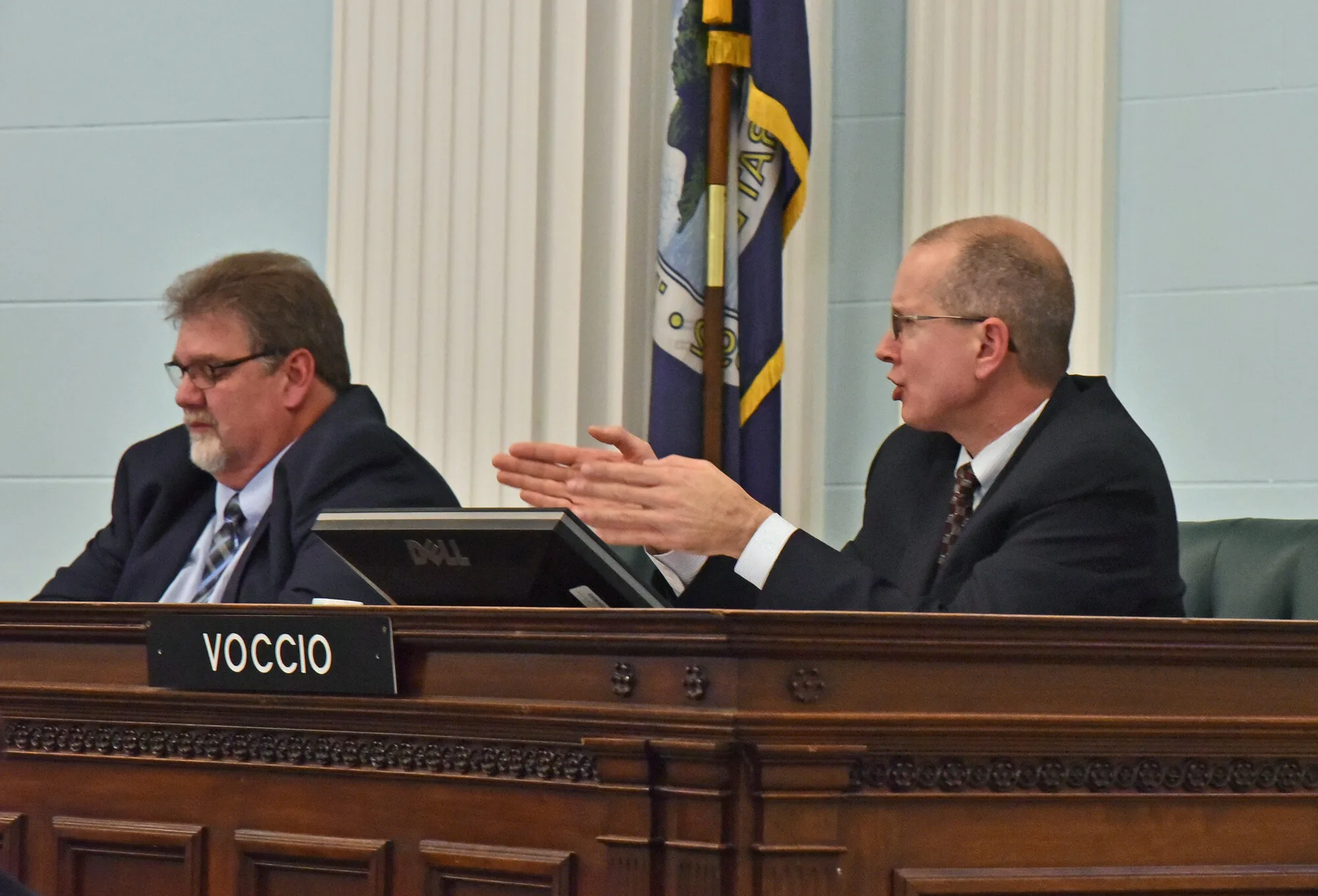
By: Chris Voccio, Niagara Falls City Councilman
Now that warmer weather is here, pot hole repair and street repaving is happening in Niagara Falls and everywhere else in the northern part of the country.
The disrepair of our streets is a common concern among citizens. Another is our high property tax rate. Related to this, at least in terms of this column, we are witnessing the dismantling of the Grand Island toll collection booths, replaced by an automated toll collection system.
I mention these three things (potholes, taxes and tolls) because in this column I’ll focus on the benefits of relying more on user fees instead of blanket income or property taxes to pay for certain government services.
In a previous column I made the point that golfers should pay for golfing and that their recreational pursuit should not be subsidized by taxpayers. That same line of reasoning can apply elsewhere. Even roads.
The federal and state taxes on gasoline, when used for road repair, are a user fee. The people who use the roads pay gas taxes. People who don’t drive don’t pay those taxes. The more you drive, the more you use our roads, the more you pay.
When we use income taxes or, at the local level, property taxes, for road work, we’re forcing the little old lady in LaSalle who doesn’t drive out of her area of the city, to pay for roads she doesn’t even know exist. I understand that other people, who live elsewhere in the city, pay for the little old lady in LaSalle’s roads. I also understand that a roadway system is conducive to economic development, and that our groceries and everything else we consume is delivered on our roads, so it may make sense for some of the bills for road repair be carried by society as a whole.
For a moment, forget that there are federal highways and state roads and city roads, regulated and policed by various agencies.
What if people who used various roads paid for those roads to be maintained? What if there were tolls to drive on most main roads? With automated tolling becoming more prevalent, thereby reducing the inconveniences formerly imposed by toll booths, it isn’t too far-fetched to imagine tolls taking on a greater share of road construction and improvements.
A few years back, the state of Indiana sold one of its tollways to a foreign conglomerate for billions of dollars. The private company maintains the road and charges toll rates enough to earn a profit. The state benefited by having billions of dollars from the “sale” (I believe it was actually a long-term lease) to use elsewhere. Privatization of roadways is not a new development. Turnpikes, I believe, were initially private concerns that provided a roadway and charged a toll for their service.
Perhaps one day, probably far off in the future, we may be paying a toll to drive along Pine Avenue or Hyde Park Boulevard, automatically tabulated as we drive down the street, perhaps added to our biannual tax bill.
In the meantime, just as we ask golfers to pay for golf, the city should ask the users of services to pay for those services before asking property taxpayers to pay higher tax rates.
There are some things that are probably best paid for by taxpayers at large. I’ve often said that public safety is the primary role of government, so spreading those costs across society probably makes sense. (Although you could consider speeding tickets, parking tickets and other “fees” along these lines as user fees, and some municipalities charge for ambulance services.)
As the City of Niagara Falls wrestles with ways to balance its budget, I’ll be an advocate for holding the line on property taxes and, as a last resort, preferring user fees over broad-based taxation.
Of course, there are plenty of expenses to be cut, but that’s for another day.
Chris Voccio is a Niagara Falls City Council member and can be reached at [email protected].