The Boomers: Meet the New Old – Are We the Same as the Old Old?
Please click the link below to subscribe to a FREE PDF version of each print edition of the Niagara Reporter
http://eepurl.com/dnsYM9
BY: Dr. Blair Roblin
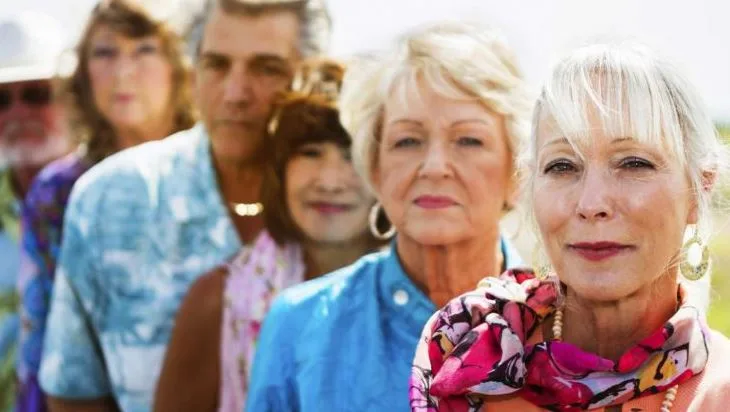
Ah, the Boomers. The active, self-determined paragons of change. Into our seventh decade of social disruption, we are set to rewrite the book on old age. Away with the image of today’s elders as dithering in dependence and frailty, and make way for a new order – the “new old”.
It might be believable if we hadn’t heard it all before. According to Martin Gumpert’s book, “You are Younger than You Think,” the new old are more focused on creative activity and individual rights, and they even look quite different from seniors of the past. At least that’s what he wrote in 1944. Has there been a watershed in our image of the old? How about during the “gray power” era of the 1970s when seniors exerted their might for social and political ends?
Gerontologists have an explanation as to why this all sounds so familiar. As each succeeding generation approaches their senior years, they feel a strong need to distance themselves from stereotypical images of today’s old. Dr. Håkan Jönson (Lund University, Sweden) describes this as the “temporal construction of old age”. It’s essentially a form of ageism, where the old of the present are cast as the “other” and a new impression needs to be created. It also makes ageism the most paradoxical of the “isms”, in the sense that we basically discriminate against our future selves.
Let’s consider how Boomers might alter the image we have of old age. Will it be based on improved health and vigor that we will carry through our senior years? There is a common assumption that adults now are healthier than in decades past. Alas, much of this is urban myth. According to the Centers for Disease Control and Prevention, half of all American adults now have at least one chronic disease – heart disease, cancer and diabetes are the biggies – and incidence has been on the increase. Much of this is related to rising obesity rates, now at one-third of the adult population. We may be living longer, but it’s a hollow victory when our increases in lifespan come more from extending our years of chronic illness at the end of life than our years of health in the middle.
If not by superior health, perhaps the new old will be distinguished by personality, as independent, self-directed seniors, distinct from the passive oldsters of today. For sure, there is ample social research confirming that Boomers demand engagement and control of personal matters related to financial, medical and legal affairs. We are more educated than previous generations and require information on everything that affects us. Women, in particular, have made tremendous advances in autonomy in recent decades, personal and financial. They also account for the majority of the seniors’ population, since they live longer than men.
Indeed, this image of the new old may have some promise, though it comes with caveats. Boomers will eventually gain distinction as the “oldest old” so far, complete with – and in spite of – all our health issues. When Gumpert wrote his book in the 1940s, life expectancy was 63 and now its almost two decades longer. Many will come to rely on care services that encompass activities of daily living (bathing, dressing, etc.), feeding, incontinence and memory care. Already, a majority of nursing home residents have some form of dementia.
More so than in previous generations, the ability of seniors to maintain independence when health and cognition fail will be based not on their own assertive disposition, but on structures and attitudes of society more generally. It will depend on institutional safeguards that force others to listen, such as participation and input into one’s plan of care, residents’ councils in homes, and respect for advance health care directives.
Seniors will also need advocates, both family and friends, to remain dominant for them when they no longer can be. Fortunately, law and practice have made strides in this direction. But without a system that respects the wishes of older adults requiring care, the dependence of seniors will persist and any discussion about the assertiveness of the new old will mean little.
The Author:
Blair Roblin is 60ish. He writes, speaks and conducts research on matters related to seniors, and he holds a PhD in health services research and gerontology.