Biosolids Are a Normal Part of Agriculture
Ned Beecher, Executive Director NEBRA (www.nebiosolids.org)
Last week, the Town Board in Wheatfield decided to defend the town’s local ban on biosolids use on farms. Biosolids are treated and tested wastewater solids that are excellent soil amendments.
In June, Wheatfield was notified by the Department of Agriculture and Markets (NYSDAM) that the Town Biosolids Law runs contrary to the state’s “right-to-farm” law, which is intended to protect farms from arbitrary restrictions. In their response (available at the Wheatfield website), the Town Board claims that NYSDAM “largely ignored the mounting scientific evidence concerning the inadequacy of the federal and state governments’ outdated biosolids regulations and completely failed to address the scientific evidence of the unfavorable local soil conditions within the town.” They claim that unregulated pollutants in biosolids (e.g. trace chemicals from products used in homes every day) create risk.
The Board’s actions are not surprising; they have been pressured by a few citizens who are more active and vocal than the few farmers who may be interested in using biosolids. They are responding to (some of) their constituents.
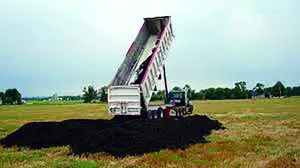
But their entrenched, absolutist position is unfortunate and unnecessary. There is no valid “mounting scientific evidence concerning the inadequacy of federal and state” regulations. Decades of research at universities across North America – and two National Academy of Science reviews – have determined that biosolids use in accordance with regulations is acceptable. And local soil conditions and water tables are addressed under state biosolids regulations; if a local soil doesn’t meet the research-based state requirements, then biosolids can’t be applied. (In contrast, manure applications can present similar risks if not properly managed, but are far less regulated.)
Biosolids’ safety is also supported by experience. Biosolids compost has been in use in the area for some time, and New York has had ongoing biosolids recycling for decades. Across the U. S., about 60% of wastewater solids are recycled to soils as biosolids, mostly on farms. Like animal manures, biosolids contain critical plant nutrients and organic matter that build soil health. Biosolids increase carbon storage and replace some need for imported fertilizers – significant environmental benefits. Many farmers rely on biosolids as just one normal part of their soil fertility program.
Wheatfield’s Board claims that protection of public health and the environment requires the Town ban. They don’t recognize that those involved in biosolids recycling are themselves dedicated to protection of public health and the environment. Wastewater treatment was identified by the British Medical Journal as the most important public health advance of the past 150 years. Biosolids management is a part of it. Public wastewater treatment officials around the country, the federal EPA, the U. S. Dept. of Agriculture, the U. S. Food & Drug Administration, and every state environmental agency – not just NY’s – support regulated biosolids use. These agencies exist to protect public health and the environment. Although Wheatfield’s leaders have learned a lot about biosolids over the past two years, their expertise cannot be expected to equal that of these many agencies.
The NYSDAM ruling (to which Wheatfield’s Board has just responded) provided an independent review of the merits and risks of biosolids. The agency found “the Town of Wheatfield did not provide any new information demonstrating that the existing DEC and EPA regulations for the land application of biosolids in New York have not been adequate to protect the public health and safety.” The state Department of Health came to the same conclusion.
NYSDAM provided a similar letter to the town of Bennington last year, requiring that town to not enforce its ordinance restricting biosolids use. Bennington complied. Under the state “right-to-farm” law, using biosolids is a normal agricultural activity. Notably, Pennsylvania’s highest court came to the same conclusion last year in a ruling based on that state’s “right-to-farm” law.
Wheatfield’s Board, driven by a few vocal citizens, are choosing to fight – at considerable cost to all involved. Their technical arguments about local conditions may have merit; but those arguments can be made as part of local oversight of biosolids use under existing state regulations. Instead, the Board is choosing to defend an extreme outright ban.
Wouldn’t it be more constructive for all parties to engage in more direct dialogue, working toward local compromise solutions? The Board could be instrumental in advancing such dialogue and mutual understanding. Like many things, biosolids recycling is continually improving – in part because of such dialogues. Rather than spending public funds on more years of conflict, isn’t there some way to work through the technical issues locally, with transparency and local oversight, to advance learning and understanding?
Biosolids recycling as a concept is not going away. Wastewater solids have to be managed. We all contribute to their production, even if we’re on a septic system. You can burn biosolids or landfill them – both of which have environmental impacts. But recycling them to soils is usually the best environmental option. Let’s work together on biosolids recycling, making it work for farmers – and their neighbors and towns. We welcome dialogue.