Jury Nullification Has Long History of Righting Wrong Laws
Below is something that somehow is not taught in public schools. It is history nonetheless and easy enough for anyone who is interested to verify.
Jury ended power of Kings
In 1215, when the Barons of England compelled King John to sign the Magna Carta, trial by jury was established. The King now had to seek permission through 12 citizens unanimous in their verdict before he could take anyone’s freedom away. That’s why we have jury trials: To protect people from government oppression.
Right of Assembly; Freedom of Religion; jury can’t be punished
In 1670, Quakers William Penn and William Mead were prosecuted for preaching to an assembly. The government did not approve of the Quaker religion and made laws against public assembly. At the end of the trial, the judge instructed the jury to return a guilty verdict. Four jurors, led by Edward Bushell, refused to return the guilty verdict. The judge then ordered the jury locked up until they returned with an acceptable verdict, the one he had asked them to return. For two days the jury refused to return a guilty verdict and the judge ended the trial. As punishment, the judge ordered the jurors imprisoned until they paid a fine. Bushell refused and spent months in jail. He was eventually released after his habeas corpus petition prompted the Court of Common Pleas chief judge to rule that a jury can nullify the law and forbade judges from punishing jurors for their verdicts.
Witch trials stopped
The Salem witch trials began in 1692. After a splendid year-long government conviction rate and the execution of 33 witches, in May, 1693, juries decided the court of Oyer and Terminer had gone too far. They nullified the witchcraft law with 52 consecutive hung juries and/or acquittals. Frustrated, prosecutors ceased bringing cases to trial. Juries made it impossible to hang or otherwise put to death known witches in Salem.
Freedom of speech won by jury
In 1734, John Peter Zenger’s newspaper criticized the Royal Governor of New York. It was against the law to criticize the government in Colonial America, as it still is in many countries that do not have jury trials. The British charged Zenger with seditious libel. At his trial, Zenger’s lawyer, Andrew Hamilton, admitted Zenger broke the law but asked the jury to acquit because the law was bad and Zenger published the truth. Chief Justice James Delaney disagreed. “The truth is no defense,” he ruled.
Hamilton urged the jury “to make use of their own consciousness and understandings in judging of the lives, liberties or estates of their fellow subjects,” declaring jurors “have the right, beyond all dispute, to determine both the law and the fact.”
Hamilton said if jurors cannot nullify laws, then “juries (are) useless, to say no worse . . . The next step would make the people slaves.”
The transcripts of the trial were widely published and the verdict encouraged literature critical of England by such as Franklin, Jefferson, Paine and others. If Zenger’s jurors had obeyed the judge’s directions, the people of America might still enjoy British rule.
Jury trial in the bill of rights
Given the jury’s role in Zenger’s and many other Colonial trials, the framers of the Constitution envisioned that juries would continue this role when they guaranteed jury trials in the Sixth Amendment.
Benjamin Franklin said that jury nullification is “better than law, it ought to be law, and will always be law wherever justice prevails.”
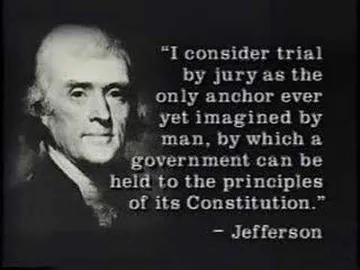
Thomas Jefferson wrote, “Were I called upon to decide whether the people had best be omitted in the Legislative or Judiciary department, I would say it is better to leave them out of the Legislative. The execution of the laws is more important than the making [of] them.”
Alexander Hamilton said of some of the framers of the constitution, “If they agree on nothing else, (they) concur at least in the value they set upon the trial by jury; or if there is any difference between them it consists of this: the former regard it as a valuable safeguard to liberty; the latter represent it as the very palladium of free government.”
Capital punishment
Juries in England and America used nullification to reject harsh applications of capital punishment forcing both countries to limit the death penalty to murder and treason.
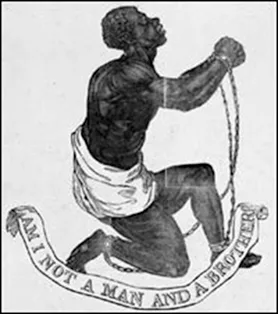
Nullified fugitive slave act
The fugitive slave law of 1850 was enacted to mollify slave owners from the South who were threatening to secede from the Union since slaves were illegally running away and the North was not doing enough to stop it. The law provided for stiff punishment for “criminals” who helped slaves escape.
In Syracuse, New York, 24 “criminals” were indicted for helping a slave escape from jail. A federal judge in Buffalo called the defendants “disturbers of society.” Four trials ended in three acquittals and compelled the government to drop the charges.
In 1851, a crowd broke into a Boston courtroom and grabbed a slave named Shadrach Minkins and turned him loose. The judge called the defendants’ actions in that case “beyond the scope of human reason.”
President Millard Fillmore demanded prosecution. A grand jury indicted three people. Daniel Webster led the prosecution. After one acquittal and several hung juries, the government was forced to drop all charges.
Because of juries, a network of criminals called abolitionists organized knowing northern juries would not convict. Things got worse. The Southern States did secede. The Civil War followed and then the Emancipation Proclamation. If northern juries had simply followed the law as the judge directed, African Americans might still be human property in accordance with federal law.
Set Wild Bill Hickok free
Wild Bill Hickok and Davis Tutt engaged in a one-on-one pistol, quick draw duel on July 21, 1865 in Springfield, Missouri. Tutt was killed. Hickok was charged with manslaughter. Mutual combat was against the law.
Witnesses claimed both men fired, but Tutt was the initiator, the first to display overt aggression. It was a question of honor. Had Hickok not fought, he would have been branded a coward.
Judge Sempronius Boyd instructed the jury that a conviction was its only option under the law. Then he famously instructed that they could nullify by applying the unwritten law of the “fair fight” and acquit. The jury acquitted Hickok.
Helped end prohibition
In 1920, the US Constitution was amended to prohibit the sale of alcohol because a majority wished to impose their moral beliefs on the minority of citizens. The jury protected citizens from the tyranny of the majority. During Prohibition, juries nullified alcohol control laws about 60 percent of the time. The fact that most juries would not convict on alcohol control laws made the use of alcohol widespread throughout Prohibition. Jury resistance contributed to the adoption of the Twenty-first amendment repealing Prohibition. The jury reflecting made prohibition a toothless amendment.
Union rights
In the late 19th century, vigorous prosecution on “conspiracy” charges against criminals known as striking union workers was thwarted by jury acquittals and gave unions the right to organize, assemble, and go on strike.
* * *
As you can see, throughout history, government has on occasion not always been right. Some say there is plenty wrong with our present-day government. Only the people have lost sight of their duty to know their proper role: To vote in the jury box as they vote in the ballot box.
It is also seen that government has no capacity to admit its laws are wrong. By its very nature, government must try enforce its laws – good or bad. It is for these two reasons that we have juries to protect our freedoms.
Now you might think that since the jury brought us so many of our cherished freedoms, the government would want the true role and purpose of the jury taught to every child in every public school.
I wonder why that does not happen?